Slim’s Juke Box: JD McPherson, Moot Davis, Amelia White, Gene Watson, Hobart Brothers & Lil’ Sis Hobart

Posted on: May 10th, 2012 By:

by James Kelly
Contributing Music Editor

Welcome to the first edition of Slim’s Juke Box. Our goal is to spread the word about recent, new and upcoming CD releases that may appeal to the average ATLRetro.com reader. Every few weeks we will be presenting a summary of five or so albums that are spending time in my disc drive. There will be various country, Americana, deep soul and assorted roots rock artists, plus whatever else floats my boat, as I have a pretty wide range of musical interests. You can also expect a few words on worthy re-issues. Hopefully you will read about something that strikes your fancy, and check it out.

JD McPherson
SIGNS AND SIGNIFIERS
Hi-Style Records

I’m embarrassed to say that this dude somehow went under my radar for the last couple of years, but one listen to this great new release and I was hooked! Mining the caves of classic R&B, rockabilly, and jump blues, McPherson fits in somewhere between Big Sandy and James Hunter. From the deep groove of opening track “Northside Gal,” through the Sun Session sounding “Fire Bug,” and the evocative moody ramble  in “A Gentle Awakening,” McPherson and the band get it right on every point. Jeremy Sutton nails the bass lines, and drummer Alex Hall keeps things moving.  I can’t pick a favorite song; it’s all good!

Moot Davis
MAN ABOUT TOWN
Highway Kind Records

New Jersey native Moot Davis was originally a rocker, but his discovery of Hank Williams, Lefty Frizzell and other classic country artists led him down a different path. After a couple of albums that went nowhere but on the critic’s “Best Of” lists, he took some time off. A stint in Austin and now Nashville has rekindled the twang, and “MAN ABOUT TOWN is a fine collection of new tunes from a real deal honky tonker. Chris Scruggs’ sweet steel intro on “Rags To Rhinestones” sets the bar high, and Davis keeps the caliber up from start to finish. It’s not hard to do with Kenny Vaughn on lead guitar and production, and the fine duet with Elizabeth Cook on “Crazy In Love With You” recalls George & Tammy. This is the kind of stuff that’s simply too country for country radio anymore.

Amelia White
BEAUTIFUL AND WILD
Self-Released

It takes a lot of guts to try and make a living as a musician, and while Amelia White is willing to take on the arduous and often unrewarded task, the big question is why hasn’t she gotten more attention? With her fifth album, White proves she has the chops to stand alongside some of Americana’s finest. With a smooth syrupy voice (BETTER than Lucinda. There, I said it) and a penchant for rich emotional lyrics, White’s introspective songs capture a side of life that few people get an opportunity to experience.  She goes far beyond the formulaic singer-songwriter shtick, with sitars, deep percussion and drifting melodies that keep you guessing.  While Music City pushes the likes of Taylor Swift and Carrie Underwood, real talented people like Amelia White grind it out on the road, making music worth listening to.

Gene Watson
BEST OF THE BEST: 25 GREATEST HITS
Fourteen Carat Music

Back in the late ’70s and early ’80s there were some awesome country tunes on top of the charts. It was a time when commercial country was finding a balance between the traditional style and the obtuse pop influences brought about by Chet Atkins and Billy Sherrill. Texas roadhouse singer Gene Watson had a string of hits during that era, and managed to toe the line between pop and country (with an emphasis on the country). On this career retrospective, Watson re-records 25 of his signature tunes, some were chart toppers and some were deep album cuts, but they are all pretty dang good. Well, the schmaltzy “Paper Rosie” may not be as intense as the classic “Should I Go Home (Or Should I Go Crazy)” or his best known opus “Farewell Party,” but it’s fun stuff nevertheless. Watson had a stellar chart history, and a recent bout with cancer has not affected his amazing voice. It’s good to see and hear the old timers keeping it real.

The Hobart Brothers + Lil’ Sis Hobart
AT LEAST WE HAVE EACH OTHER

Supergroups come in many forms, but a supergroup consisting of indie artists Jon Dee Graham, Freedy Johnson and Susan Cowsill bring a whole new perspective to the concept. Recorded over various dates, the trio got together in Austin, and a musical harmonic convergence occurred. Susan, yes, from THOSE Cowsills, is one of the most talented songwriters in the business, with an ear for catchy hooks and a great voice. Graham has been a mainstay in the Austin scene for years, and even though his solo works is amazing he may be best known for the True Believers, with Alejandro Escovedo. Johnson is an amazing songwriter, but virtually uncategorizable. Combined, the talents of all three result in one of the most listenable, infecting, and entertaining albums of the year. Each member brings something unique to the mix, and it works on every level. Great stuff, trust me.

Category: Retro Review | Tags: , , , , , , , , , , , , , ,

Retro Review: HANG AROUND by Sonoramic Commando

Posted on: Apr 25th, 2012 By:

By James Kelly
Contributing Music Editor

Sonoramic Commando
HANG AROUND
Sonoramic Records

Atlanta has had a rich and thriving country/rockabilly/roots music community for over 25 years, and while the bigtime glory days of the storied Redneck Underground may fade a bit, there are still plenty of talented bands making good music that fits in the genre. On HANG AROUND, their second album, Sonoramic Commando exhibit significant maturity and a strong command of their eclectic style. Over 18 quick tracks (clocking in under 50 minutes), the boys cover most of the musical bases well, including the rockin’ groove of “Gina L.,”  the sweet honky tonk “Pony” and the surfy sultry “The Stalker.” Lead singer-bassist Rodney Bell, guitarist Chad Proctor, and drummer Matt Spaugh cut the record over a three-day stretch, and the rawness of the “live in the studio” recording effectively captures their energy and intensity.

Other than support on two tracks by pedal steel player Bill Fleming, the boys pretty much did this one by themselves, and manage to create a full and well balanced sound.Chad’s guitar rings loud and clear, Matt’s backbeats keep the rhythm rolling, and Rodney’s confident vocals deliver the quirky material with harmonic accompaniment from his cohorts. The band wrote 16 of the 18 tracks, and received some help with the words for a couple of tunes from Commando Emeritus John McLean and the Bluejays’ Jay Murphree. All in all, a fine piece of work, and an excellent representation of Atlanta’s roots rock community.

Category: Retro Review | Tags: , , , , , , , , , , , , , , ,

Retro Review: Southern Gothic That Scares and Mostly Satisfies: Stephen King and John Mellencamp Conjure Up THE GHOSTS OF DARKLAND COUNTY

Posted on: Apr 24th, 2012 By:

The cast, creators and director of GHOST BROTHERS OF DARKLAND COUNTY following the world premiere on April 11, 2012. Photo credit: Raymond McCrea Jones.

By James Kelly
Contributing Music Editor

Over 12 years in the making, the collaborative effort of John Mellencamp and Stephen King, GHOST BROTHERS OF DARKLAND COUNTY, finally comes to life at Atlanta’s Alliance Theatre in a world premiere run that lasts through May 13.  Based on a true story, the tale of brotherly hate combines Mellencamp’s neo-americana songs (with live music, directed by T-Bone Burnett), King’s dark horror gothic tale spins, and first class direction by Alliance Artistic Director Susan V. Booth.  It is an endeavor that works incredibly well on many levels, but inevitably leaves something to be desired at other points.

Set in a family cabin outside of a small town in rural Mississippi, the story alternates between 1967 and 2007, telling parallel tales of two pairs of brothers, each with their own rivalries and conflicts. The adult father of the 2007 brothers is the younger brother of the 1967 brothers. Having witnessed a horrific family tragedy as a ten year old, he finally decides to disclose the secret he has kept for 40 years in order to save his own sons from a similar fate. The deeply convoluted story line meanders a bit in the first act set-up, but picks up steam in the second act and catapults the viewer into a shocking and unpredictable conclusion that is trademark Stephen King.

Stephen King attending the Alliance Theatre's world premiere musical . Photo credit: Greg Mooney.

The music propels the story, and while Mellencamp’s songs are basically tailor-made for the plot advancement, the quality varies from wonderful standalone tunes that would be great to hear in and of themselves, to a few numbers that seem to struggle to fit in the context of the story, and a few that are more or less “show tunes.” The live band is tight and on the mark, and overall the vocalists are adequate. Standout performers include Jake LaBotz as “The Shape” a devilish storyteller who narrates and “choreographs” the action while performing some of the show’s best songs, young Royce Mann perfectly captures a 10-year-old’s reactions to the unfolding horror, and Christopher Morgan, playing both a bartender and “spirit guide” whose songs bring depth and emotion to the story. The other performers all deliver adequately; although some of the ensemble music pieces seem a bit forced and mechanical at times.

The most obvious star of the show is the absolutely stunning staging. The set is a work of art, and the lighting and use of projections create an atmosphere of true Deep Southern gothic drama. With ephemeral images wandering aimlessly around the stage, characters casually sitting and walking from one place to another, a well done “Lover’s Leap” and functional water tower, the stage actually seems as big and spooky as Darkland County, while simultaneously retaining the intimacy of a small cabin living room.  There are multiple homages to King’s prior projects, including a bar scene reminiscent of THE SHINING, and of course, a car (not named “Christine”).

A lot of work and effort obviously has gone into this very complicated and powerful production, and risks were taken with mostly good results. For fans of live theater, contemporary music, and Stephen King, there is something for everyone.

Category: Retro Review | TAGS: None

Retro Review: Fire, Feline and Frivolity Make for Sexy, Sassy Second Annual Southern Fried Burlesque Fest Pageant

Posted on: Mar 16th, 2012 By:

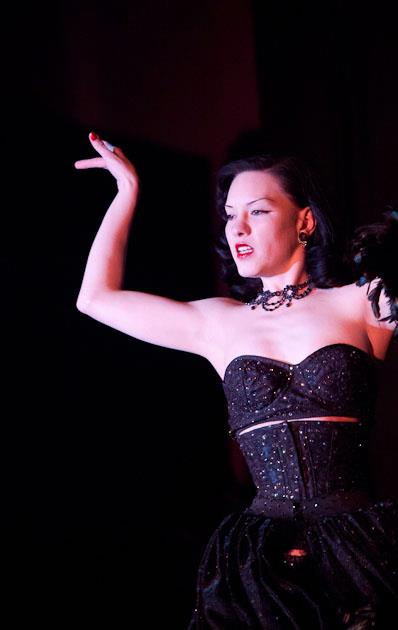
Orchid Mei, the reigning Southern Fried Burlesque Queen, performs at the 2nd annual festival's Pageant. Photo credit: Kevin McConnell.

By Talloolah Love
Contributing Writer

This past weekend I had the divine pleasure to write an article for ATLRetro on Atlanta’s biggest burlesque event to date, the second annual Southern Fried Burlesque Fest, presented by local honeys Katherine Lashe of Syrens of the South Productions, and Ursula Undress. Not only did I get to review a show, I got to review THE show, the Pageant to crown the next Southern Fried Burlesque Festival Queen! The other exciting addition to this year’s pageant was the advent of the very first Southern Fried King of Burlesque.

What I love about these festivals is the opportunity to attend what feels like class reunions all over the country. You get to see beautiful people, friends and colleagues for an entire glorious weekend. Sometimes I wish the shows began later than advertised, but alas, we all had to hit our seats right on time. No small wonder with the good Bishop involved. David Bishop, known as “The Bishop of Burlesque,” who hails from New York, makes all festivals he is involved with run smooth as silk. He is always a joy to work with and I look for him to be involved in every festival I attend. For two years now, the ladies behind Southern Fried have made David a part of their event. They truly are smart cookies for ensuring that he’s a part of their festivities; he really knows how to make it happen!

As the lights went down, I sat firmly in a seat next to the spotlight, and out came John Carney. I haven’t seen John grace the stage in what feels like years, and it gave me a tingle of nostalgia as he sang his rendition of “The Burlesque Show” (set to THE MUPPET SHOW theme music). Atlanta’s “worst comic in the world” did not disappoint with his bad puns and offbeat humor about his clothes. The judges were announced: Satan’s Angel, Gabriella Maze, Shannon Doah, Perle Noire, Tim Mack and Siren Santina. You can’t get a better panel than that, folks; you just can’t!

Kittie Katrina exchanges a kiss with Stephan, King of the Southern Fried Burlesque Festival. Photo credit: Kevin O'Connell

The whole show was a lot of fun, and John Carney built up a nice sense of suspense for the category and results of who the next Queen would be, without short-changing the rest of the categories. My personal highlights of the show include Donna Touch; I have seen the cat burglar act before, and I thought this was truly the best. She was on fire. Stage Slave Gavin was a very pretty little hoot, and Üla Überbusen brings me to tears with her cat lady number without fail every time!

Next, there was some banter between a very cranky but pink Bourgeois Betty who played with sock puppets while putting John Carney in his place. I am not sure he knew what hit him. Siren Santina did a rousing booty shaker to “I Like Big Butts and I Cannot Lie,” by Richard Cheese, and we all had a great laugh for the experience.

Then, the moment of truth, we got to see Satan’s Angel perform. Never have I seen her so electric as she was that evening! The whole room was positively on fire, along with her pasties, in her signature act. If you’ve never seen Satan’s Angel perform her fire pasties act, the one that made her famous in the world of burlesque, then you’ve no idea what you are missing. She lives up to her name in everything that she does, and we all love her for it.

By the time the Angel’s act was over, we had forgotten we were there for a competition! Here are the final results for the Second Annual Southern Fried Burlesque Festival:

Siren Santina sings a farewell song before passing on her crown. Photo credit: Kevin O'Connell.

Best Group: Slow Burn Burlesque from New Orleans;

Best Duet: Bourgeois Betty and Katarina Von Dutch from Augusta, Georgia;

Best Variety: Safety 3rd from Atlanta

King: Stephan from San Antonio.

Then we had a song from Siren Santina, who was soon to be the former Queen of Southern Fried. I can’t put in writing the name of the song she sang, as it is not exactly all ages friendly, so suffice it to say that it was a gift for all who came out that night, and it was utterly blush-worthy. Now, the final results of the night:

Second runner up: Donna Touch from Chicago

First runner up: Lola Le Soleil from Atlanta

Queen of 2012 Southern Fried Burlesque Festival: Orchid Mei from Denver.

Satan's Angel sets the audience on fire. Photo credit: Kevin O'Connell.

And let’s not forget the Subcategories:

Miss Congeneality: Sunny Midnight

Audience Choice: Stephan

Most Innovative: Orchid Mei

Most Funny: Lola Le Solei

Best Costume: Donna Touch

Most Classic:  Orchid Mei

Category: Retro Review | Tags: , , , , , , , , , , , , , , , , , , , , , , , , , , , ,

Retro Review: Splatter Cinema Opens the Door to Fulci’s THE BEYOND at The Plaza Theatre

Posted on: Mar 12th, 2012 By:

By Philip Nutman
Contributing Writer

Splatter Cinema Presents THE BEYOND (1981), fully remastered and uncut direct from Grindhouse Releasing; Dir: Lucio Fulci; Starring Catriona McColl, David Warbeck, Cinzia Monreale; Tues. March 13 9:30 PM; Plaza Theatre; Trailer here.

Originally an art critic who became a filmmaker (he made 18 comedies before becoming renowned as one of the most violent, gory Italian horror movie directors), the late, great – some might say “crazy” – Lucio Fulci made some of the coolest, most demented flicks of the late 70s/80s. Need a roll call? ZOMBIE (1979), promoted in Europe as a sequel to Romero’s DAWN OF THE DEAD; THE HOUSE BY THE CEMETERY (1981), THE BEYOND (1981), etc., etc (he made over 50 movies).

What accounts for the violence in his later films? His wife’s suicide back in 1969 and a daughter’s fatal car accident several years later always weighed heavily on him, and his hyper-violent films such as THE NEW YORK RIPPER (1982) caused him to be branded a misogynist by prentious critics, although he always claimed that he loved women. He also struggled with severe type 2 diabetes, a fact he tried to hide from colleagues, fearing he would be deemed unemployable.  And he was an inveterate gambler.

So what about THE BEYOND? For those who are not die-hard horror fans, the basic scenario is this:

E tu vivrai nel terrore! L’aldilà, its original Italian title, also known as SEVEN DOORS OF DEATH, is Lovecraftian in tone. The film has gained a cult following over the decades, in part because of the film’s gore-filled murder sequences, which were heavily censored when the film was originally released in the United States in 1983.

Cinzia Monreale as the creepy Blind Girl in THE BEYOND (1981); Grindhouse Releasing.

In 1927, Louisiana’s Seven Doors Hotel is the scene of a vicious murder as a lynch mob crucifies an artist named Schweick, whom they believe to be a warlock. The artist’s murder opens one of the seven doors of death, which exist throughout the world and allow the dead to cross into the world of the living. Several decades later, a young woman inherits the hotel and plans to re-open it for business. But her renovation work activates the hell-portal, and soon she and a local doctor find themselves having to deal with the living dead, and Schweick, who has returned as a malevolent, indestructible corpse, apparently in control of the supernatural forces.


Need I say more? Other than get down to The Plaza Theatre Tues. night, March 13 for a rare, gory treat of Italian horror weirdness.

Contributing Writer Philip Nutman  knows a thing or two about zombies: he is the author of the cult classic undead novel, WET WORK, and recently produced ABED, the sickest zombie love story ever, in Grand Rapids, Michigan.

Category: Retro Review | Tags: , , , , , , , , , , , , , , , , , ,

Retro Review Preview: New Nils Lofgren CD, Ian Hunter/Mick Ronson and PIL Live DVDs Take Listeners on a Joy Ride Back to Halcyon Days of Soaring Guitar Solos/Glam/Punk

Posted on: Mar 7th, 2012 By:

By Philip Nutman
Contributing Writer

Nils Lofgren, OLD SCHOOL
Ian Hunter Live at Rockpalast, Featuring Mick Ronson
Public Image Limited Live at Rockpalast
MVD Entertainment

In 1971 I would wear my sister’s stack-heeled red boots, steal Mum’s mascara, lipstick and face powder.

I wanted to be Bowie/Ziggy. Mott the Hoople were my favorite band. Yes, I was a Glam Rock kid pretending to be a rock n roller (I can’t play any instrument or sing; I will never play Madison Square Garden and open for Aerosmith). As I grew older, it was Blue Oyster Cult, Motorhead and The Damned…then Cheap Trick (but I grew up listening to early Beatles, The Rolling Stones and The Who)…

MVD have just released a CD of rare Nils Lofgren songs and two DVDs of German Rockpalast performances: Public Image Limited (PiL) and Ian Hunter (of Mott  plus Mick Ronson of Ziggy-era Bowie fame). They are “must haves.”

Nils makes my heart soar. The PIL performance with John Lydon (rather fat, but performing “Anarchy in the UK”) made me pogo on the couch and throw myself on the floor.

The Hunter/Roson DVD drove me nuts…visuals fluctuate, but audio nearly destroyed my sound system.

You love music? BUY THESE NOW (and thank me later).

Note: This is a preview of more extensive reviews of all three that will appear on ATLRetro.com soon.

Contributing Writer Philip Nutman has been FANGORIA magazine’s longest running reporter ­ 30 years this May ­ but also knows a thing or two about rock music. He is also the author of the cult classic zombie novel, WET WORK, and just wrapped filming ABED, the sickest zombie movie ever, in Grand Rapids, Michigan.

Category: Retro Review | Tags: , , , , , , , , , , , , ,

Retro Review: Who Can Take a Valentine and Turn It into a Scream? The CANDYMAN Can

Posted on: Feb 13th, 2012 By:

By Philip Nutman
Contributing Writer

Splatter Cinema Presents CANDYMAN (1992); Dir: Bernard Rose; Based on the short story by Clive Barker; Starring Tony Todd, Virginia Madsen, Xander Berkeley; Tues. Feb. 14 9:30 PM; Plaza Theatre; Trailer here.

Based on the Clive Barker short story, “The Forbidden,” which appeared in the fifth volume of his BOOKS OF BLOOD, CANDYMAN (1992) was a considerable hit with horror fans and made actor Tony Todd something of a horror icon. His credits also include the Tom Savini remake of George Romero’s NIGHT OF THE LIVING DEAD (1990), THE CROW (1994), THE ROCK (1996) and FINAL DESTINATION (2000), among many others.

While not heavy on the gore quotient, CANDYMAN is one scary movie. The original story was set in England, but the filmic version was transposed to an American setting ­ specifically, Chicago ­ to make it more commercial. Ironically, the movie was made by a British director, Bernard Rose, who had previously made the incredibly creepy PAPERHOUSE (1988).

CANDYMAN stars Virginia Madsen (sister of Michael, of RESERVOIR DOGS ear-slicing infamy) and Xander Berkeley. Xander is perhaps best known for playing George Mason, Jack Bauer’s arsehole boss, in the first incarnation of the hit TV series 24; Jack had to blow his brains out. And since we here at ATLRetro know our pop culture trivia, Tony Todd played an African terrorist in a later season.

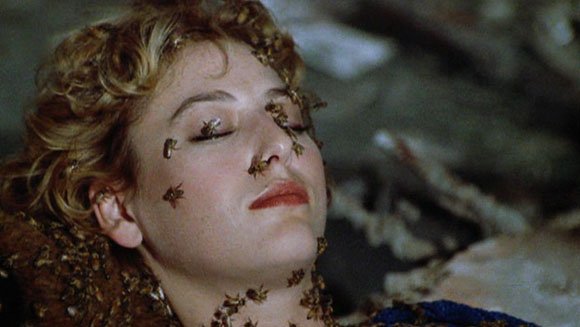
Virginia Madsen in CANDYMAN (TriStar Pictures, 1992)

We don’t believe in plot spoilers, so we’re not going to tell you the narrative of CANDYMAN. If you’ve never read the Barker story, you should hunt it down (Note: IN THE FLESH was the American title of the fifth volume of THE BOOKS OF BLOOD) or if you have never seen this movie, then you’re in for a scary treat thanks to the fine folks at Splatter Cinema and the wonderful Plaza Theatre. If you’ve seen the film, you know what we’re talking about. Horror movies are always better seen on the big screen. Either way, do yourself a favor and go see CANDYMAN.

Contributing Writer Philip Nutman has been FANGORIA magazine’s longest running reporter ­ 30 years this May ­ and knows a thing or two about horror flicks. He is also the author of the cult classic zombie novel, WET WORK, and just wrapped filming ABED, the sickest zombie movie ever, in Grand Rapids, Michigan.

Category: Retro Review | Tags: , , , , , , , , , , , , , , , , , , , , , , ,

Retro Review: From Mayhem to Meditation in a MultiTasking World: MANDALA: SACRED CIRCLE IN TIBETAN BUDDHISM at the Carlos Museum

Posted on: Feb 8th, 2012 By:

The three-dimensional mandala of Guhasamaja from Gyuto Monastery in India- a large wooden palace, carved so intricately it would take you hours to notice all the details. Photo credit: Lisa Stock

By Lisa Stock
Contributing Writer

In a world often defined by small cubicles, cramped airplanes, thick traffic and crowded super-stores, personal space is greatly sought but not often achieved. Recently, I’ve limited mine to my smart phone, the steering wheel and whatever computer or TV screen is in front of me. My personal space has effectively become a cluttered mess of sometimes organized mayhem. Or so I thought, until I went to MANDALA: SACRED CIRCLE IN TIBETAN BUDDHISM at the Michael C. Carlos Museum at Emory University through April 15. The Buddhists have a unique and beautiful perspective on sacred space and honor that through the tradition of mandalas.

Mandala is the Sanskirt word for “circle” and can also mean “house” or “palace” in the Buddhist tradition. The mandala serves as an aid to meditation on the path to enlightenment, and helps to view the world in more harmonious ways. The term can be applied to everything from the sphere of the universe, to a circular painting, to the space you create around yourself. As presented in the exhibit, the art of mandalas is not limited to circular paintings but also manifests in tapestries, reliquaries and sculpture. The most impressive piece is the three-dimensional mandala of Guhasamaja from Gyuto Monastery inIndia- a large wooden palace, carved so intricately it would take you hours to notice all the details. But that’s the beauty of mandalas – you could easily stand there all day and look at them. They are said to bring peace and harmony to the creator and viewer.

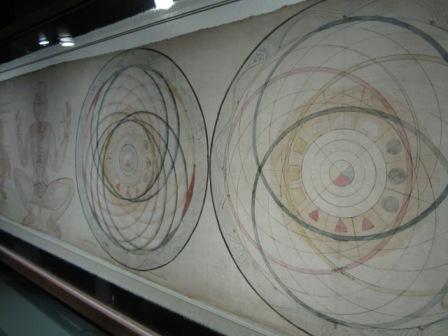
A 16th century, 8-foot Buddhist cosmological scroll. Photo credit: Lisa Stock.

The message of the exhibit is the concept of sacred space. Each of us creates our own personal mandala of sacred space. It’s what we put out to our families, our coworkers and friends, and what we take inward as well. My mandala may seem narrow at times, but it can be a beautiful one. If I’m collecting photos on Pinterest of faraway places I’d like to visit and those inspire me to take a walk in the park at lunch to see the trees budding early, then that computer has become part of a tranquil mandala. Our sacred space is, truly, what we make it. This exhibit is definitely one you carry out into the world with you. To that point, from Feb. 1-11, monks from the Drepung-Loseling Monastery will construct a sand mandala on site. On April 15, the sand will be swept into a container and poured into the nearby stream so the blessing of the mandala can spread throughout the city.

In conjunction with MANDALA: SACRED CIRCLE IN TIBETAN BUDDHISM, the Carlos Museum are also offering an extensive list of related programs such as “Embodying Nirvana: Meditations on Buddhist Mandalas,” a lecture by John Dunne, Associate Professor of Religion at Emory University (Feb. 9, 7:30 p.m.); Artful Stories (for children on Feb. 18); AntiquiTEA – tea and a lecture on the importance of a rice mandala (March 6) and more. For more information and a complete schedule of events, click here.

Category: Retro Review | Tags: , , , , , , , , , , , , , ,

Retro Review: Blast-Off Burlesque Takes a Joyride Back to the Heyday of the ’70s LA Porn Industry with BOOGIE NIGHTS at the Plaza Theatre Sat. Jan. 21

Posted on: Jan 18th, 2012 By:

By Dean Treadway
Contributing Writer

BOOGIE NIGHTS (1997); Dir: Paul Thomas Anderson; Writer: Paul Thomas Anderson; Starring Mark Wahlberg, Burt Reynolds, Julianne Moore, Don Cheadle, William H. Macy, John C. Reilly, Heather Graham; Taboo-La-La Series hosted by Blast-Off  Burlesque at Plaza Theatre, Sat. Jan. 21; 10 PM; arrive early for a night of innuendo-laden foods, Porn Persona superstar costume contest, prizes, Rollergirl madness and a hilarious stage show with special guest Cousin Dan; age 18 & over only; trailer here.

BOOGIE NIGHTS is one of those films I love in spite of my better judgment.  It’s a resolutely big-screen experience, and Atlanta moviegoers are going to have a rare opportunity to see it on the big screen at the Plaza Theater on Saturday, Jan. 21 when it appears as the feature accompanying Blast-Off Burlesque‘s saucy Taboo-La-La show starting at 10 p.m.

I can recall gendering at the beautiful one-sheet for BOOGIE NIGHTS before it was released in the fall of 1997.  I marveled at its huge cast, and was excited about the subject matter – a trip through the Los Angeles porn industry of the late ’70s.  I didn’t know who the writer/director Paul Thomas Anderson was at that time, having not seen his first feature, the small-time con film, HARD EIGHT, but that would soon change.  The poster, though, with its intricate photo collage of characters from the film, promised an epic portrayal unlike anything ever attempted.  I was extremely thrilled about seeing it.

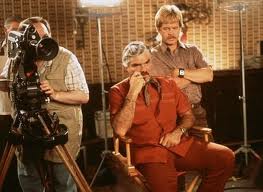
Burt Reynolds in BOOGIE NIGHTS. New Line Cinema, 1997.

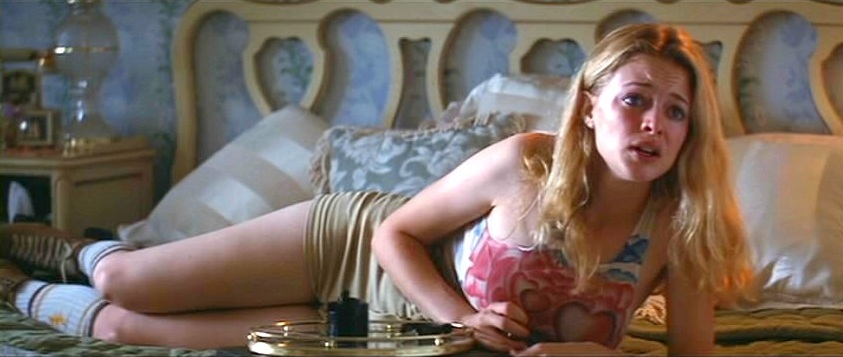
In BOOGIE NIGHTS, we follow its naïve central character, Eddie Adams (Mark Wahlberg), as he is ensnared into a makeshift family of porn filmmakers and performers.  He’s spotted by the patriarchal auteur Jack Horner (Burt Reynolds) as he’s performing tricks on the side at his busboy job at an L.A. nightspot.  Impressed by his entire…um…package, Horner invites Eddie into the porn fold, and there his triumphs and troubles begin.  Eddie’s eventual transformation into the XXX-star Dirk Diggler is followed in great detail, but this story is really a kind of connective tissue for all the many other tales the film has to offer. Julianne Moore is a top-tier porn actress battling the courts and her ex-husband over custody of their son while using Horner’s coterie of performers as sort of stand-in children. William H. Macy is a meek assistant director struggling with his wife’s brazen infidelity. John C. Reilly is an amiable second-string performer with a penchant for magic tricks who’s attempting to forge a stronger identity for himself. Don Cheadle is another beaten-down porn star who’s finding difficulty breaking into the world of legitimate business. Heather Graham is the sexy but largely innocent Rollergirl, searching for the family she can’t find at home.  And Horner himself is battling pressures to convert to video rather than film – an idea he finds abhorrent (this is especially poignant now, seeing as how this might be your last opportunity to catch BOOGIE NIGHTS on 35mm).   Throw into this mix Philip Seymour Hoffman as a schlubby sound guy, Luis Guzman as an enthusiastic outsider, Robert Ridgely as a troubled producer, Philip Baker Hall as an imposing moneyman, and Ricky Jay as Horner’s loyal editor, and you can get a sense of this film’s great ambition.

Heather Graham plays a sexy, but largely innocent Rollergirl in BOOGIE NIGHTS. New Line Cinema, 1997.

I still find moments in the film to be quite wonderful.  The widescreen cinematography, by Anderson regular Robert Elswit (who would go on to win an Oscar for his work on Anderson’s THERE WILL BE BLOOD), is always vibrant and inventive, as is the ’70s-era source music score (which pairs nicely with a sad circus underscore by Michael Penn).  Anderson writes dialogue for dumb people particularly brilliantly, so there’s always funny conversation going on.  The period detail in the garish art direction and costume design are spot-on.  I love seeing Burt Reynolds tearing into a good role, for possibly the last time, and Julianne Moore is lovingly histrionic here, as she would be in Anderson’s MAGNOLIA as well (both received supporting player Oscar nominations).  As always, I find John C. Reilly to be a hoot as Reed Rothschild, and Phillip Seymour Hoffman is sweet as the crewman who gets a crush on Eddie (his tortured confession of this to the unsuspecting Wahlberg is perhaps the movie’s most shattering scene).

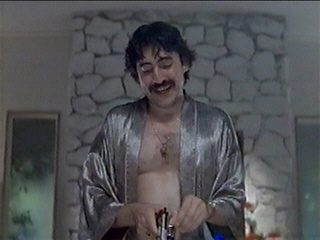
Alfred Molina in BOOGIE NIGHTS. New Line Cinema, 1997

But I also find that many parts don’t work. William H. Macy is a barely-sketched punching bag of a character. Don Cheadle’s story fails to make a deep impression (note: any time you see a character in a white suit, you can bet that thing’s gonna be covered in blood by the end of the scene). And Graham’s Rollergirl, while extremely cute, also seems thinly-written.   It feels like Anderson just has too much movie here for 2 ½ hours to hold (BOOGIE NIGHTS would have been a much better TV series).

Still, though the film owes a bit too much to the GOODFELLAS style of soaring-then-crashing storytelling (with the onslaught of the 1980s being the rather too-obvious turning point), BOOGIE NIGHTS is required viewing if only for its extremely tense final third, which finds Eddie struggling with a cocaine addiction while trying to launch a hilariously ill-thought musical career (the songs, performed bravely and horribly by Wahlberg and Reilly, include the original “Feel My Heat“ and a cover of the closing song to THE TRANSFORMERS MOVIE, “The Touch“).  Particularly memorable in this segment, too, is one of the great scenes in movie history, where Wahlberg, Reilly and ne’er-do-well Thomas Jane are stuck inside a free-basing coke-dealer’s house.  The gun-toting dealer is played with a maniac’s energy by Alfred Molina; he’s so coked up, he has no idea that these three are planning to rip him off.  With firecrackers being thrown left and right by his houseboy, he holds the guys semi-hostage as he insists on playing “Jessie’s Girl” and “Sister Christian” for them on his stereo.  You’ll never hear these two songs in quite the same way again.  It’s really a marvelously scary moment that puts you right there in this mess and gets your heart pounding.

Mark Wahlberg and John C. Reilly in BOOGIE NIGHTS. New Line Cinema, 1997.

There are many other things I like about the movie: the stiffly-acted porn sequences, shot on a scratchy 16mm; the wonderful tour through one of Horner’s house parties, done in one long shot that recalls a scene out of I AM CUBA, where we follow a girl as she jumps into the pool out back, all to the tune of Eric Burdon’s “Spill the Wine”; and the final shot of the film, which recalls another Scorsese classic, RAGING BULL, but which ends with, at last, a glimpse of what made Dirk Diggler famous.  I wish BOOGIE NIGHTS as a whole was as good as these individual moments, but it’s certainly something worth checking out, especially if you’ve never seen it on the big screen.  And it remains an important film, if only as the breakthrough for an artist like Paul Thomas Anderson who, with each passing work, only seems to be getting better and better.

Dean Treadway is a longtime Atlanta film analyst and film festival programmer with more than 25 years of published works. His popular film blog is called filmicability with Dean Treadway.  He is also a correspondent for Movie Geeks United, the Internet’s #1 movie-related podcast.

Category: Retro Review | Tags: , , , , , , , , , , , , , , , , , , , , ,

Retro Review: Lost Finnish Art/Vampire Movie THE WHITE REINDEER Gets a Rare Bite on the Big Screen at The Plaza Sat. Jan. 14

Posted on: Jan 11th, 2012 By:


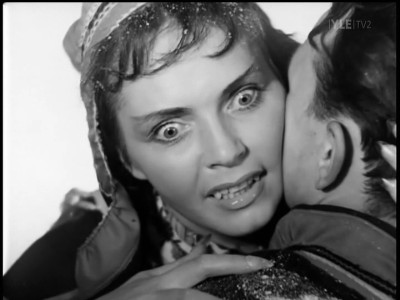
Pirita (Mirjami Kuosmanen) takes a bite from the throat of an unsuspecting hunter in THE WHITE REINDEER (1952).

THE WHITE REINDEER (1952); Dir: Erik Blomberg; Starring Mirjami Kuosmanen; Introduced by Professor Morte (Silver Scream Spookshow) including ticket giveaway to Days of the Dead horror convention; a short audience discussion will follow the film by GSU Prof. John Decker; Sat. Jan. 14  7:30 p.m.; $8; Plaza Theatre;  Trailer here.

Art, foreign, horror and classic fantasy film buffs all will get a rare treat when lost award-winning 1952 Finnish movie THE WHITE REINDEER (“Valkoinen Peura”) gets an extremely rare return to the big screen at the Plaza Theatre on Sat. Jan. 14 at 7:30 pm., courtesy of the Scandinavian-American Foundation of Georgia (SAFG) and the Mythic Imagination Institute (MII). The first significant post-World War II Finnish film, THE WHITE REINDEER won a 1953 Golden Globe Award for Best Foreign Film and the Fairy Tale Award at the Cannes Film Festival from a jury led by Jean Cocteau (LA BELLE ET LA BETE). However, despite its critical acclaim and beautiful cinematography, the movie only had a limited U.S. theatrical release in the late 1950s and since then has been largely forgotten other than a recent appearance on French DVD (it’s not available from Netflix!), perhaps due to its unusual and enigmatic subject matter blending an art film sensibility, the shamanism/folklore of the indigenous, nomadic Lapland (Sami) people and the unlikely themes of shape-shifting and vampirism.

Those supernatural aspects have earned  THE WHITE REINDEER a cult reputation among classic horror movie fans, making it an extra special treat to have an intro by Professor Morte of the Silver Scream Spookshow, and if you need extra incentive, he’ll be handing out a few passes to Days of the Dead, the big horror con in Peachtree City March 9-11. However, as noted, don’t get scared off if you’re more intrigued by art and foreign films or the anthropology and folklore of Sami shamanism. The art and mythic elements will get their due in a short audience discussion after the film led by John Decker, assistant professor of art history at Georgia State University, whose academic interests range from religious and devotional imagery to the zombie apocalypse.  “Tales both of people transforming into deer and of vampirism span many cultures from Europe to Native Americans,” points out Honora Foah, president and creative director of the Mythic Imagination Institute. “Films are the folklore of our times, and we’re hoping this movie will launch an ongoing Mythic Movie series.”

It’s easy to see why Cocteau was drawn to THE WHITE REINDEER. The plot itself is a simple and archetypal tale of love lost and a spell gone tragically wrong.  A lonely and heartbroken Sami woman, Pirita (Mirjami Kuosmanen, who incidentally was the wife of director Erik Blomberg), turns to a shaman for help in reigniting the love of her husband, Aslak, who is more interested in herding reindeer than romancing his wife. But thanks to being born under the curse of the Midnight Sun, the sacrifice she must make to activate the love potion instead transforms her into a vengeful “White Reindeer,” a tantalizing prize for hunters who soon find themselves the prey as she reveals herself as a beautiful vampire.

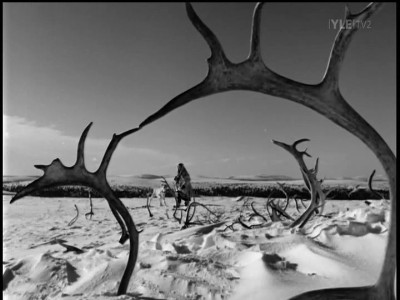
A haunting reindeer graveyard in THE WHITE REINDEER (1952)

Vivid and vibrant may seem strange terms to describe a black-and-white movie, but Finnish director Erik Blomberg knows his cinematography (he has more credits for that on IMDB than directing). Vistas of the Sami people herding the reindeer in the snow, a sled race and a traditional wedding transport one effortlessly into the world of this Nordic culture which he has also covered as a documentarian. It’s also perhaps worth remembering that the Sami themselves dress colorfully, often in navy blue, trimmed with yellow, green and red.

But it’s Mirjami herself, as Pirita, who steals the screen with her haunting, emotive eyes. Perhaps the performances are a little over-emotional at points, like that of a silent film, and indeed, dialogue is sparse and simple consistent with the stoic Finns. Still, in the context of the fantastic theme and landscape, it’s easy to see those qualities as strength rather than weakness. If you do classify THE WHITE REINDEER as a vampire classic, that silent movie but with minimal sound visual quality is more reminiscent perhaps of Carl Theodor Dreyer‘s VAMPYR (1931), an early talkie which also has very little dialogue,  than of, say, the closer-to-contemporary Universal horror classics, Bela Lugosi’s eyes aside. Incidentally, Dreyer was Danish.

It's easy to forget Bela Lugosi's Eyes when you see Mirjami Kuosamanen in THE WHITE REINDEER (1952).

Finally, if there’s one more good reason to attend: proceeds benefit the two nonprofit sponsors, SAFG and MII, and the Plaza, Atlanta’s oldest continuously operating independent cinema, open since 1939, which is also a nonprofit organization. It runs just 67 minutes, too, so there’s still plenty of time to catch a band, such as the triple-header of The District Attorneys, featuring this week’s Kool Kat Drew Beskin, Tedo Stone and Modern Skirts at The Earl. In fact, you’ll see me at both The Plaza and The Earl, and most likely dining at the Majestic beforehand, too.

Category: Retro Review | Tags: , , , , , , , , , , , , , , , , , , , , , , , , , , , , , , , , , , , ,

© 2025 ATLRetro. All Rights Reserved. This blog is powered by Wordpress