Retro Review: The Sweet Scent of POLYESTER: Blast-Off Burlesque Taboo-La-La Presents John Waters’ Most Odor-ific Cult Classic

Posted on: Dec 1st, 2012 By:

POLYESTER (1981); Dir: John Water; Starring Divine, Tab Hunter; Plaza Theatre, Saturday, December 1 at 10:00pm; presented by BLAST-OFF BURLESQUE’S TABOO-LA-LA in ODORAMA. Trailer here.

By Andrew Kemp
Contributing Writer

Let’s start with a question. What if I told you that, on Saturday night at the Plaza, you had a chance to experience a film in ODORAMA, a process that lets you scratch-and-sniff a card to experience with the, um, aromas of the movie you’re watching, aromas that include such delights as model airplane glue, skunk and flatulence? Does that sound like your idea of a fun weekend night?

Those of you who said “yes, please!” already know John Waters and his film, POLYESTER, playing as part of the regular TABOO-LA-LA series presented by Blast-Off Burlesque. You guys are going to be there anyway. For those of you who *ahem* politely declined, the burden now falls to me to change your mind.

John Waters is kind of a maniac, but movie nuts and those with a taste for the trashy have long considered him their maniac. Waters is a true indie, a guy whose tastes and warped sense of humor never stood a chance of playing in Hollywood, and so he made his own Hollywood in Baltimore, churning out a handful of homemade movies starring his friends, a company of actors who took to calling themselves the Dreamlanders. Perhaps the most famous Dreamlander was Divine, an actor who performed in drag and rose to fame as Waters’s muse, due equally to Divine’s incredible charisma and willingness to waltz into the darkest corners of Waters’s imagination. Divine starred in all of Waters’s early Baltimore films, never more famously (or infamously) as in PINK FLAMINGOES, which uses as its money shot a scene where Divine consumes dog shit. Did I mention that John Waters movies aren’t for the weak-stomached?

Baldly nasty content is what earned all of Waters’s early films an X-rating, when he bothered to have them rated at all. Waters sold himself as a master purveyor of camp, trash and kitsch, and his films can be endurance tests for the timid. So, Waters had to seek his audience, growing them like a culture through word of mouth. Many people watched Waters’s films with jaws dropped and raced from the theatre to tell friends who, of course, could never believe such filth existed at the cinema… and so they bought a ticket to find out for themselves. A passionate few liked what they saw and became fans for life. Waters’s movies owned midnight crowds back when late-night movies were for the deranged and the dangerous, but then a funny thing happened somewhere along the way: once the shock value numbed, fans noticed the actual craft and talent present both behind the camera and in front of it. Despite his image as the gleeful outsider with the pencil-thin moustache looking to tear down the system, Waters was the real deal, and as experience improved his work, his films became less pointedly offensive and more simply on-point. It was time for John Waters to go mainstream.

Enter POLYESTER, the film universally recognized as the transition from Waters’s early days with the Dreamlanders to an artist whose work could eventually be mined by Broadway (his hit 1988 film HAIRSPRAY eventually became a Broadway show, and then a movie musical, with John Travolta in the part originated by Divine. Times, they do change.) POLYESTER is John Waters’s take on the suburban aesthetic and weepy melodrama of Douglas Sirk, with Sirk’s painterly Technicolor tossed aside for garage-sale chic. Divine stars as a housewife named Francine Fishpaw whose marriage falls apart while her kids spin off in a variety of unsavory directions. To fully describe the plot would risk giving away many of its lightly-shocked laughs, but the movie isn’t afraid to explore. The more over-the-top the tragedy—and believe me, this clears the top by a half-a-foot–the more laughter Waters drags from the audience.

POLYESTER was the first John Waters film that could sit comfortably at the multiplex, and his first to receive an R-rating, bringing his work and his fans reluctantly blinking out into the sun. No matter which version of Waters you enjoy the most, generally everyone can agree that POLYESTER is one of his best and most accessible. In fact, The AV Club named POLYESTER as the ideal gateway into the director and his work.

And then there’s ODORAMA, the gimmick Waters cooked up to let his fans know that mainstream success wasn’t going to change him. In a nod to the showmanship of the great huckster William Castle, viewers of POLYESTER were handed scratch-and-sniff cards to keep up with the overactive olfactory system that helps Francine through the film’s plot. Now you can smell what Francine smells, and although the odors are rarely pleasant, the whole idea is just on the right side of wacky to lend the proceedings a heaping helping of charm. It’s Waters saying that it’s OK not to take his movie so seriously; he certainly doesn’t.

Blast-Off Burlesque is handing out ODORAMA cards for Saturday night’s viewing of POLYESTER, and they’re sweetening the deal with their usual variety show of burlesque performance and contests. The Dreamlanders would be proud.

Andrew Kemp is a screenwriter and game writer who started talking about movies in 1984 and got stuck that way. He writes at www.thehollywoodprojects.com and hosts a bimonthly screening series of classic films at theaters around Atlanta.

Category: Retro Review | Tags: , , , , , , , , , , , , ,

Retro Review: Feminine Sexual Threat Meets Avian Apocalypse: THE BIRDS Attack the Plaza Theatre in the Last Weekend of Alfred Hitchcock Month

Posted on: Nov 28th, 2012 By:

By Robert Emmett Murphy Jr.
Special to ATLRetro.com

THE BIRDS (1963); Dir: Alfred Hitchcock; Screenplay by Evan Hunter (aka Ed McCain); Starring Tippi Hedren, Rod Taylor, Suzanne Pleshette, Jessica Tandy; Fri. Nov. 30 – Sun. Dec. 2; Plaza Theatre (visit Plaza Theatre Website for showtimes and ticket prices); Trailer here.

Alfred Hitchcock, like a lot of thriller and horror filmmakers, always displayed an influence by Freudian theory. In THE BIRDS, he’s pared it down to one essential: all actions are motivated, most motives unconscious. Having first established that with the characters, he shows the same proves to be the apocalyptic secret behind the workings of the whole world.

Loosely based on Daphne du Maurier’s short story of the same title, THE BIRDS is Alfred Hitchcock’s only explicit foray into science fiction and fantasy. The screenplay by Evan Hunter (better known as crime writer Ed McCain) is awkward, but also ambitious. It’s Hitchcock’s immediate follow-up to PSYCHO (1960) and borrows from its device of a lengthy preamble, telling a story that proceeds along one narrative line until events outside the so-far-established frame of reference break that line, radically changing what the film’s about. When the main story arrives, it is disorienting and meant to be. Tippi Hedren plays a spoiled heiress who develops a crush on Rod Taylor which seems petulant – she wants to win his affection only to trump his mocking her – and a little creepy in its aggressiveness. She doesn’t know him at all, but stalker-like, she travels a long distance to arrive uninvited at his home.

Taylor lives in an island fishing community, and the first hint of the actual threat/main story comes is when Hedren is approaching the island by motorboat and a seagull flies into her, giving her a minor injury. That minor injury may have influenced Taylor in not immediately demanding she turn around and go home. So Hedren has a small opening and is not without wiles. Taylor starts to respond, but obstacles appear quickly. His clinging mother, Jessica Tandy, doesn’t like Hedren. Then there’s Taylor’s ex-girlfriend, Suzanne Pleshette, who surprisingly befriends Hedren, but also provides some insights into Taylor that suggests he’s as out-of-touch with his motivations as Hedren is.

The dialogue is a little strained, but covering interesting ground. It’s a love story examining people who don’t know why they do the things they do. It’s justifiably talky because every dialogue is a negotiation to establish one’s position in three-or-more-player power relationships.

This is also not at all what the film is about. As the threat escalates at an almost leisurely pace, the amount of dialogue decreases.

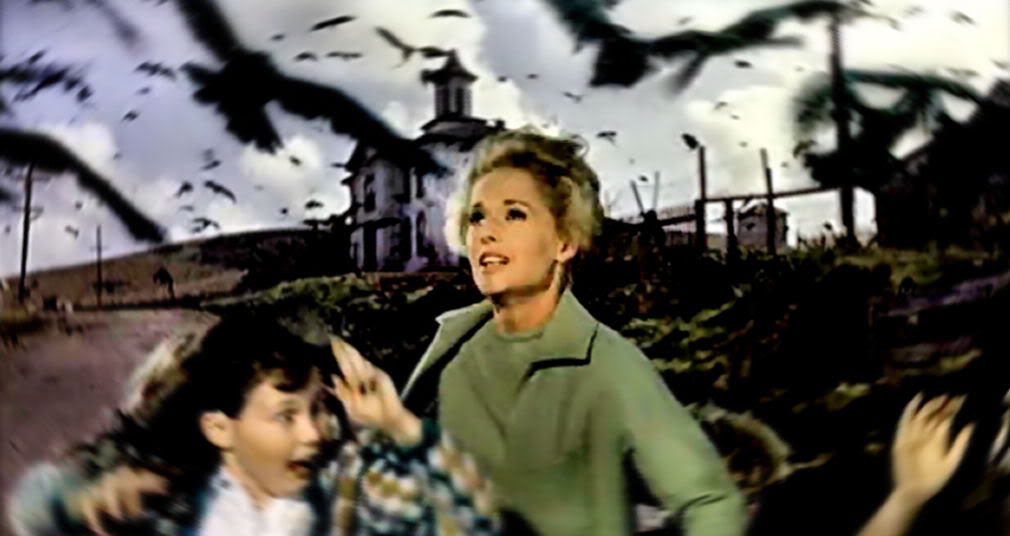
THE BIRDS attack Tippi Hedren and a group of children in one of the Hitchcock masterpiece's most iconic scenes. Universal Pictures, 1963.

What this film is about is the revenge of nature and the end of the world. The film won’t tell us why this inexplicable disaster erupts any more than Hedren can honestly explain her pursuit of Taylor. I don’t know if it was Hitchcock or Hunter who made the bold move to violate one of the fundamental rules of monster movies in their refusal to provide even a partial explanation for the events. It was ballsy though. I can’t think of another film driven by seemingly motiveless events that was anything but annoying, because in almost any other example, motivelessness is the same as incoherence. The original short story is ambiguous regarding explanation, but suggestive. The film, though, is completely opaque.

Maybe part of the success is that explanations are dangled in front of us, and they seem to make emotional sense, but clearly don’t make narrative sense. This is another of a string of Hitchcock films where ice-queen blondes appear to be the well from which all evil flows, but always Hitcock is always putting a modest twist on that easily misogynist interpretation of that “evil.” In VERTIGO (1958), Madeleine (Kim Novak) is bad, and drives a innocent man to obsession, but she’s not the main architect of the fiendish plot [Ed. note: Read our Retro Review of VERTIGO, which played last weekend at The Plaza, here]. In NORTH BY NORTHWEST (1959) Eve (Eva Marie Saint) is deceitful and part of the circumstances that put our hero at risk, but she is in on her deceit, she is serving a greater good and proves to be almost as much a victim of circumstances as our hero is. In PSYCHO (1960) Marion (Janet Leigh) is a criminal and a betrayer for sure, but none of her sins have any bearing on her fate.

Here, the apocalypse seems to arrive with Hedren, but as weird as she is, she does nothing that could reasonably provoke anything larger than Tandy’s jealous resentment. Moreover, as the story unfolds, it becomes obvious that the disaster is much larger than any of these lives or the geography we see in the film itself. When Hedren is accused of being evil’s harbinger by a hysterical woman, that seems only to reinforce the irrationality of the suggestion. But no other explanation is provided.

Semi-feminist writer Camille Paglia mined the irrational vein in search of meaning. She interpreted THE BIRDS as a celebration of the complex faces and threats female sexuality presents to a man, to the point that nature becomes an extension of that tension. She notes that more women play more pivotal roles in THE BIRDS than in any other Hitchcock film. The hero is defined by his relationships with his mother, younger sister (more like a daughter) and ex-lover, and that careful balance is thrown off by the appearance of Hedren. The disruption of the domestic balance is blown up to become the disruption of the balance of nature.

Once the bird attacks start escalating, each is paced and staged very differently from the one before, and this is where Hitchcock shows his true mastery. Every attack is remembered as a classic moment. Like Hedren sitting on a bench outside a school house waiting for Pleschette, a teacher, to take a break. Hedren lights a cigarette. We hear the children inside singing in unison. Hedren doesn’t notice what we can see over her shoulder, the playground jungle-gym gradually fill with hordes of silent crows.

Or like the largest attack, which, surprisingly, isn’t the last one. It features Hedren, who arrived at the island with caged birds, trapped in a cage-like phone booth while killer birds swirl around her (Hitchcock quite effectively put the camera inside the booth with her, so we shared the claustrophobia and shock of the assault).

And the climax, after the whole community finds itself under siege, and Hedren and Taylor’s family barricade themselves in his house. In the only scene taken directly from Du Maurier’s story, the attack becomes more frenzied, suicidal, and no defense can be adequate because there are so many of them, they are so small and there’s always another way in.

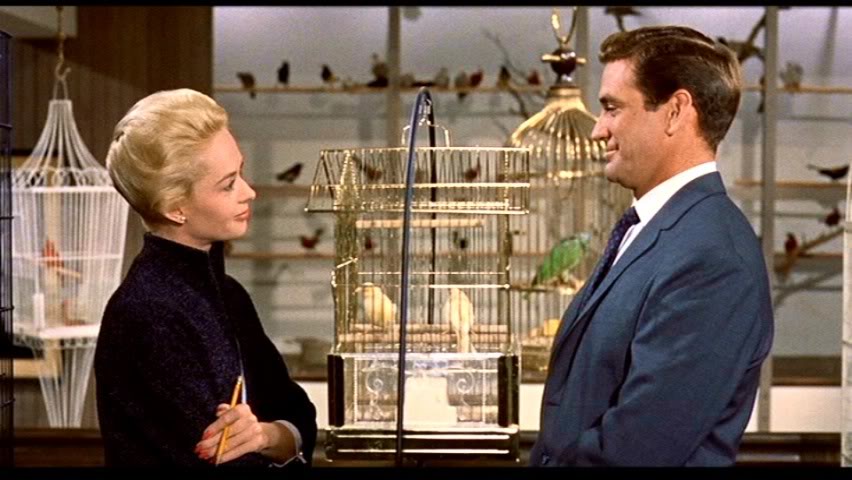
Tippi Hedren and Rod Taylor in Hitchcock's THE BIRDS. Universal Pictures, 1963.

Two things come up in every review of THE BIRDS – Hitchcock’s choice to do without a conventional score and the landmark FX. Though there is no music per se, Hitchcock did use his favorite composer, Bernard Herrmann, to create scary, synthesized bird calls to counterpoint the calculated silences. For this reason, THE BIRDS is the eeriest sounding of all his films.

Then there are the special effects. Simply put, what Hitchcock achieved should’ve been impossible with the technology of the day. It contains more than 370 separate trick shots. Every technique then imaginable was employed here including a slew of matte paintings, trained birds lured by feasts of fish and food scraps, mechanical birds, stuffed birds, and a scene during which Hitchcock literally threw live birds at Hedren (under those circumstances, the animals’ aggressiveness was probably sincere and Hedren’s fear wasn’t acting). The scene where the children are attacked on the road (this is part of the same sequence where the birds gather on the jungle-gym) involved most of the above, plus meticulous animations integrated into shots of live actors, through a complex “yellowscreen” process executed by Disney’s Ub Iwerks, who was one of the technique’s inventors. And then there were the two unnamed female artists who spent three months hand-painting seagulls onto tiny film frames for a scene that lasted less than 10 seconds.

David Thomson refers to THE BIRDS as Hitchcock’s “last unflawed film.” These two clips cover the jungle-gym attack of children sequence. I still marvel that this was done in the days before CGI:

watch?v=ydLJtKlVVZw&feature=relmfu

watch?v=hplpQt424Ls

Robert Emmett Murphy, Jr., is based in New York. This article is number 58 in a series of 100 essays he is penning, inspired by the British documentary THE 100 GREATEST SCARY MOMENTS (2003). It is reprinted with permission. The moment selected for the list can be found at the 1 hour, 38 minute marker. 

Category: Retro Review | Tags: , , , , , , , , , , , , , , , , , , , , , , , , , , , , , , , , , ,

Kool Kat of the Week: Like a Jagged Stone: Keef Richards Gets What He Needs Paying Tribute to a Guitar Legend and Rocks Around the Christmas Tree Sat. Dec. 1

Posted on: Nov 28th, 2012 By:

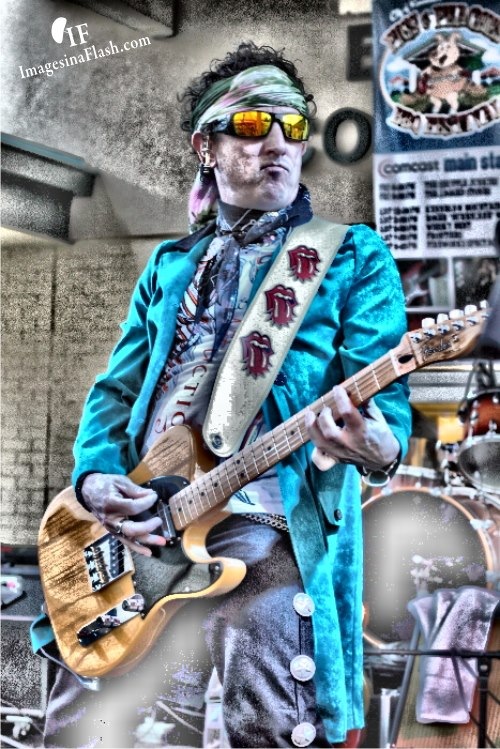
Barry Zion, aka "Keef Richards," of The Jagged Stones.

Forget the Elvis impersonators. The Rocking Around the Christmas Tree benefit on Sat. Dec. 1 at 7 p.m. treats you to a rarer form of superstar tribute and a delightfully different holiday party courtesy of Nine Inch Neils, who channel Neil Diamond in his ‘70s heyday, and Jagged Stones, whose name should give away the act they idolize that also came of age in the late ’60s/’70s. In addition to two rockin’ fun bands, a humble suggested donation of $10 (kids free) serves up pizza from Mellow Mushroom Decatur, two glasses of beer or wine, free sodas and a dessert bar. There’s also a silent auction including some cool items like a signed movie poster from the TWILIGHT series and an original POWERPUFF GIRLS animation cell from Cartoon Network. Proceeds support the House of the Rock (also the site of the party; 731 Peachtree St., NE, corner of 4th Street) and Lutheran Community Food Ministries, which do amazing work feeding Midtown’s homeless. So if you can, also bring some cans to benefit the food ministry. And parking is free, too.

Last year ATLRetro interviewing Cage, lead singer of Nine Inch Neils, to find out what made him and the band a believer in Neil Diamond. This year, we decided we wouldn’t get no seasonal satisfaction without catching up with Barry Zion, aka Keef Richards, of The Jagged Stones.

ATLRetro: When’s the first time you heard the Rolling Stones and was it love at first listen?

Keef: When I was 13 years old, my older brother turned me onto the GET YER YA-YA’S OUT live album. I had been taking some bass lessons, and the guitar work on that album immediately grabbed me. I can remember playing the Chuck Berry cover “Carol,” about 200 times a day until I developed the strength to do that Keith Richards rhythm. It’s quite a physically challenging thing when you are first learning as it takes all of your fingers, barre technique, pinky strength and solid rhythm with the right hand, plus the added handicap of playing on a $20 acoustic guitar with string height action that was measured in feet rather than millimeters. But thanks to that, it helped me develop some very strong muscles in my left hand. After that it allowed me to focus on the other songs and I wore out that album.

It wasn’t until I was older that I mastered Keith’s tunings and techniques and got closer to his sound, and Mick Taylor‘s fluid lead playing was something that took me years to even understand and is something I am still working on today. Mick Taylor is in my opinion, the most under-rated guitarist in rock, and his time in the Stones is clearly the era that grabbed me the most and that I try to emulate in my playing.

There’s got to be a great story about how you all came together to found a Rolling Stones tribute band?

I had recently relocated to Atlanta from NY/NJ/PA, and I had been frequenting the Atlanta jam scene and been known as “that Allman Brothers guy, that did some Stones too.” Duane Allman and Dickey Betts are other influences on my playing. I was not really interested in being in a band for the usual reasons – low pay, long hours, lots of competition, playing songs you don’t like, smoky bars, etc. One of my jam friends saw on Craigslist an ad for an open audition for a Rolling Stones tribute band, and he dragged me to the tryout. Well, of course, everybody want’s to be Keith, and when I got there, the audition coordinator asked me if I wanted to take the lead guitar spot for the audition. Since I planned on trying out for Mick Taylor’s spot, I quickly set up. I think the first song we played was “Wild Horses,” and I guess I nailed it pretty good and stayed close to the album. Then while another Keith was setting up, Skip [Stephen Skipper, aka Mick Jagger in the band] and I were sitting around, and I started playing “Love In Vain.” The two of us just clicked, and from then on Skip put the pressure on me to be in the band.

Funny we clicked so well, that he asked me which of the Keiths I liked the best, and I told him, that I thought I could do a better Keith than any of the guys that had auditioned. Skip didn’t want to lose me as Mick Taylor, but I assured him that I could backfill a lead guitarist for my slot (Yeah, even back then I had Eddie Brodeur, our current guitarist in mind) and that it was more important to have a strong Keith guitarist in the band. Well, with some hesitation, Skip let me try it, and I guess I did pretty good during that audition and have been Keef ever since then.

Since then Skip and I have become “Soul Brothers,” and we share the same vision on where the band is going. All the guys in the band are the top musicians that I had met from the jam scene.  Dave Lang (keyboard/vocals/guitar/harmonica/kitchen sink) and I had met a few months before that at a Kennesaw jam. About a year before that, Eddie Brodeur (lead guitar/Ronnie Woods) and I had met  at a Southern Rock theme night jam where without a rehearsal we absolutely clicked. It’s a really rare thing to have two lead guitarists that can leave space for each other and have styles that are different enough yet similar enough for the magic to happen. Eddie is that guy for me. The bass player and drummer took a while to settle in, but Joel Edwards (bass) is one of the most sought after bass players in Atlanta, and he’s a scary good musician that can play just about any style, and also plays drums, keyboard and guitar very well. Frankly I was shocked that he wanted to play in The Jagged Stones. He has, in my opinion, solidified us and carried us over that hump of trying to establish a new band.   Martin Abbot was the drummer that same night I played with Eddie at the theme night, and I knew that day that he would be the rock steady drummer to anchor the rhythm section.
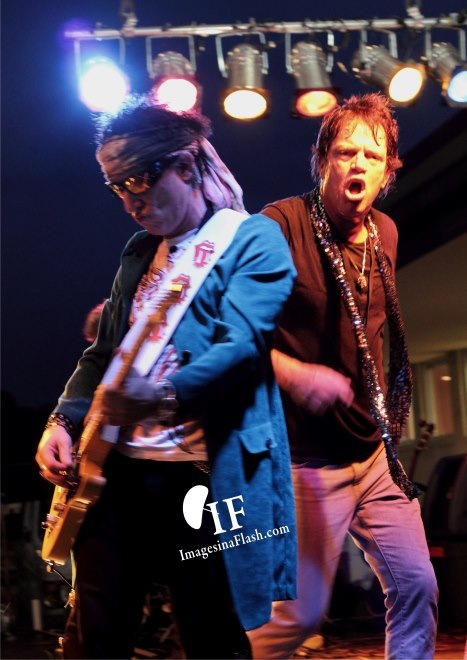
Keef Richards (Barry Zion) and Mick (Stephen Skipper) of The Jagged Stones.

How many Rolling Stones tribute bands are out there and where do The Jagged Stones fit in?

We definitely have some competition and that keeps us always trying to improve. I really love The Glimmer Twins from Philadelphia. I’ve seen them  on visits I make up north, and they are a vintage 70s Stones band. I think because we are a bit older, we are more of the recent Stones tribute, probably 90s/2000s. The GTs don’t travel much down here, and we don’t travel up there, so I like to think that we are mutually supportive of our respective bands, and territories. Their Mick (Keith Call) and Keith (Bernie Bollendorf) are masters at their craft, and they have a great supporting cast behind them and have been at it for quite some time and are successful at it.  I really respect Bernie and the attention he pays to the tunings and the version of the songs they play. I think what sets us apart from the other tributes, is that Skip nails the look and sound of Mick Jagger whereas most of the other tribute bands have a Mick Jagger lookalike, but they don’t sound much like him.

This is your second year doing the Rockin’ Around the Christmas Tree show at the House of the Rock with the Nine Inch Neils, right? How did you get involved?

Cage (Neil Diamond from the Nine Inch Neils) was instrumental in getting Skip to go from a karaoke singer to a front man for The Jagged Stones. Last year’s event was really our first “real gig,” and thanks to Cage, we got that gig and met Jon Waterhouse and Pastor Matt. Jon has been a key to our success, and without his support and guidance we would probably not be together, so anything that we can do to help Jon out including playing his charity events we try to do. For me, once I saw what was going on at The HOTR last year, I was just really moved by the people that are involved with the church and the event. It was a real special event for me, and one that I will always remember. I think this year will be even better, as we are now more seasoned, and our current lineup is firing on all cylinders.  People have told me that they can see that we all have fun playing the music and that it carries over to the audience.

What can audiences expect from the Jagged Stones at Rockin’ Around the Christmas Tree this Saturday? Holiday favorites? Greatest hits?

We always put a lot of thought into our setlist and tailor it to each show.  Dave Lang works hard on that and takes in all the parameters of the venue. You will definitely hear all the familiar Stones hits and a few deeper cuts for the Stones aficionado. They have such a vast catalog of hits, [so] it becomes challenging to try and cram them all into the time we have allotted.

Some people might think the event can’t be hip, because it’s at a church. But to us this just tells us the House of the Rock is mighty hip. Tell them why they’re wrong.

As I said above, the event was an incredibly moving experience for me last year. I was surprised that the Church has a state-of-the-art sound system, lighting and a nice size stage for Skip to strut his stuff on. The people who organize and staff the event are cool cats and chicks and are more of the hippie generation, and certainly not that image I had of little old church ladies pulling bingo balls. Pastor Matt is quite a musician himself and has a pretty good band that plays regularly at the HOTR. I live close by and it truly touched me how they are helping the hungry in downtown Atlanta. I have been shopping the whole week for canned food to bring with me and encouraging all our friends to go above the ‘suggested one can of food. Also it’s such a bargain at $10 for two excellent bands, let alone Mellow Mushroom Pizza and two drinks. You’d be hard pressed to find that anywhere around Atlanta.

What’s gives you the most satisfaction about being a Rolling Stone impersonator?

Well if you look up the definition of ‘Rock & Roll’ in a dictionary, there should only be a picture of Keith Richards there. He is Rock & Roll, and what better character could anybody want to portray then Keith?! Lots of people think Keith is not a very good guitar player, but he finished in the #10 spot in Rolling Stone Magazine’s Top 100 Greatest Guitarists of all time. I think it’s easy to take him for granted as he is not flashy or incredibly fast or a very innovative kead player. However he is the riff-master. There are only a handful of guitarists that you can identify by their tone, and Keith’s tone is one of those. It doesn’t take more than a few notes to identify a Rolling Stones song on the radio. I try really hard to reproduce the subtleties of his tone by using his tunings, instruments, attack and, of course, dressing up like him and moving around like him.

What’s next for you and the Jagged Stones in terms of gigs? Any recordings?

Recordings are not something I have given much thought to, but Skip has been in the studio recently recording some corporate stuff that needed some Jagger-like vocals. We love playing live and thrive at auditoriums and festivals. Skip has a knack of working a big stage and reaching a big crowd. In addition to the HOTR show, we are really looking forward to our New Years Eve show at The Strand.

What do you do when you are not a Jagged Stone?

Besides sleeping? For fun, I like to take long walks in dimly lit cemetaries. Seriously I enjoy the jam scene around Atlanta, and have a day job that keeps me pretty busy. The joke I have is that I am an “Antique Consultant,” which has its origin in women giving me the usual interrogation to assess my datability quotient:

Woman: What’s your name?
Me: Barry
Woman: What do you do?
Me (over loud music): IT Consulting,
Woman, yelling: Wow that’s so interesting. Have you ever been on ANTIQUES ROADSHOW???
Me: No, not antiques. IT like computers.
Woman:  Oh ok, cya.

So I learned to just go with the antiques and say I speacialize in Queen Anne chairs, and the interrogation proceeds a few more questions, before the woman leaves.

Category: Kool Kat of the Week | Tags: , , , , , , , , , , , , , , , , , , , , , , , , , , , , , , , , , , , , , ,

Retro Review: LADY TERMINATOR Will Slay Anyone Who Gets in Her Way Every Last Thursday at Cinefest!

Posted on: Nov 27th, 2012 By:

LADY TERMINATOR (1988); Dir: H. Tjut Djalil (aka Jalil Jackson); Starring: Barbara Anne Constable, Christopher J. Hart and Claudia Angelique Rademaker; Thurs. Nov 29, 9 p.m.; Cinefest Film Theatre; $5 (free for GSU faculty, students and staff with Panther ID); Trailer here.

By Aleck Bennett
Contributing Writer

The last Thursday of every month brings something almost unexplainable to Cinefest Film Theare…something that approaches that fine line between “good” and “bad” and blows it to kingdom come.

Science fiction author Theodore Sturgeon once postulated something that has since become commonly known as “Sturgeon’s Law”: 90 percent of everything is crap. Few take this law to its logical conclusion, though: if 10 percent of everything is great, it stands to reason that 10 percent of the crap left over is really great crap.

Ladies and gentlemen, the 1988 Indonesian epic LADY TERMINATOR is some really great crap.

It’s hard to go wrong with any movie that opens with death by hoo-hah. I mean, that’s just science fact. By presenting you with this event right up front, LADY TERMINATOR is letting you know that anything can—and likely will—happen at any time. Before the opening credits hit, we not only see what happens to those who attempt to bed the woman known as the “South Sea Queen” and not satisfy her, we find out that the one man who does succeed at the task pulls an eel out of the mysterious woman’s…area…and turns said eel into a knife. This angers the temptress, which seems reasonable. She says that she will return in 100 years to seek revenge on his great-granddaughter, and then flees into the oceans’ depths to join with the forces of evil.

Like you do.

Fast forward 100 years, and a feisty young scientist named Tania (key quote: “I’m not a lady, I’m an anthropologist!”) comes to town to research the legend of the South Sea Queen. She takes a boat out to where the Queen’s castle supposedly collapsed into the ocean (it’s nowhere near shore, but why let this story be bound by little things like geography?), dives down to see if she can find the ruins, is magically transported to a bed in the middle of nowhere and tied down by sentient scarves, and the mysterious eel from earlier takes up new residence in a new…area. She emerges from the ocean possessed by the spirit of the South Sea Queen yet acting like Arnold Schwarzenegger in THE TERMINATOR, boinks a few random jerks, and proceeds to get on with the job of seeking vengeance by pursuing that previously mentioned granddaughter (who, naturally, happens to be a pop star).

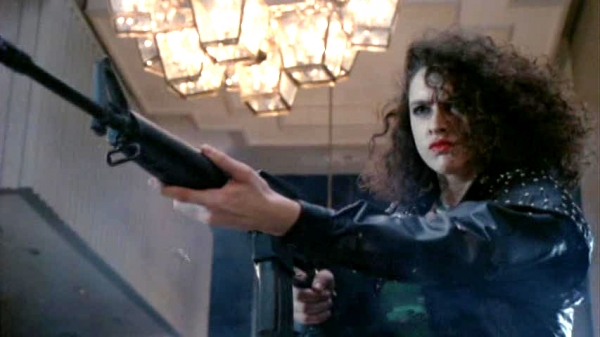
Barbara Anne Constable is LADY TERMINATOR. Studio Entertainment, 1989.

From that point onward, the film is a non-stop barrage of gunfire, vehicles exploding, sex, blood, nudity, bad pop music, sub-John Carpenter synthesizer score, atrocious dubbing, ridiculous dialogue, popped-collar Polo shirts, inexplicable decision-making, goofy romance, jewelry mix-ups, uncalled-for hotel room eye surgery…and I think that the narrator from the TALES FROM THE DARKSIDE television series shows up. We’re never exactly told why the titular Lady Terminator acts like a cyborg, nor why she can’t be killed, nor why she can shoot laser beams out of her eyes and create electrical energy with her hands. Possession is a mysterious thing. Maybe it’s got something to do with those eels. Maybe they’re electric eels.

It’s hard to give this film any kind of critical analysis or review. It escapes logical exploration. It exists in a place beyond human reasoning. It stubbornly dares you to justify itself. And while it’s true that few movies have so little reason to exist, fewer deliver on the goods the way that LADY TERMINATOR does in its own remarkably wrongheaded way. It manages to effortlessly accomplish what any number of Troma Entertainment productions go out of their way to attempt, and without any of the “hey, we’re trying to make a bad movie here!” winking that you get from Troma’s output. It may not be accomplished on any level, objectively speaking, but it’s never boring in the least. It’s fun. It’s insanely entertaining. And, really, shouldn’t that be the standard by which it’s judged?

LADY TERMINATOR is crap. But it’s really great crap.

Aleck Bennett is a writer, blogger, pug warden, pop culture enthusiast, raconteur and bon vivant from the greater Atlanta area. Visit his blog at doctorsardonicus.wordpress.com

Category: Retro Review | Tags: , , , , , , , , , , , , , , , , , , , , ,

This Week in Retro Atlanta, Nov. 26-Dec. 2, 2012

Posted on: Nov 26th, 2012 By:

Monday, Nov. 26

Make your way over to The Five Spot if you’ve got A Case of the Mondays With Style – Pay What You Can Cover! Northside Tavern hosts its weekly Blues Jam featuring blues and southern soul singer, Lola Gulley. Head over to Fat Matt’s Rib Shack to check out Pead Boy & The Pork Bellys at 1:45 p.m.

Tuesday, Nov. 27

Inspired by the Jean Cocteau classic movie, the Broadway musical version of the Disney hit, BEAUTY AND THE BEAST, starts a one-week run at the Fox Theater. Catch this week’s retro cinema classic, WEST SIDE STORY (1961) at Northlake Festival Movie Tavern, directed by Jerome Robbins and Robert Wise and starring Natalie Wood, George Chakiris and Richard Beymer. Come out to Sweet Georgia’s Juke Joint to listen to the high-energy jazz sounds of the Jacob Deaton Trio at 6:30 p.m. Check out the Tommy Dean Trio at the Georgia Shrimp Company in Peachtree City as they play favorites from The Rat Pack, classic soul and great American songbook standards. Recent Kool Kat Calu Cordeira mixes tiki libations at Mai Tai Tahitian Tuesday starting at 9 p.m. at the Dark Horse Tavern. Grab your horn and head over to Twain’s in Decatur for a Joe Gransden jazz jam session starting at 9 p.m. The Crosstown Allstars are rocking the blues at Fat Matt’s Rib Shack, or you can blues it down with Nathan Nelson & Entertainment Crackers at Northside Tavern.

Wednesday, Nov. 28

Enjoy an acoustic evening with Ray LaMontagne at the Cobb Energy Centre at 8 p.m. Make your way down to The Basement to catch Nathaniel Rappole’s solo project, Gull, a living, breathing, squawking drum that cries out popular music from the past 50 years and delivers it from a single unique perspective. Come out to Sweet Georgia’s Juke Joint to listen to the sweet blues of The Breeze Kings at 6:30 p.m. Get ready to rumba, cha-cha and jitterbug at the weekly Swing Night at Graveyard Tavern. Disco in the Village at Mary’s is your midweek neighborhood dance party! Frankie’s Blues Mission is on a mission to bring the blues to Fat Matt’s Rib Shack, and Danny “Mudcat” Dudeck brings the gospel blues to Northside Tavern.

Thursday, Nov. 29

Check out Duncan Sheik at Smith’s Olde Bar as he plays songs off his latest album, COVERS 80S REMIXED. Some of the songs covered in his album include hits by The Cure, New Order, Tears for Fears, the Smiths, the Psychedelic Furs, the Thompson Twins and Love & Rockets. Did he ever get Jessie’s Girl? Make sure to check out Rick Springfield at the Cobb Energy Centre at 8 p.m. and maybe he will finally give us the answer. It is the last Thursday of the month which means it’s time for Disco Balls at Mary’s! DJ NoTech and guests spin deep dirty disco – Frisco Disco, Crisco Disco, Munich Disco, Italo Disco, Nu Disco, Funky Disco and even some House and little 80s Pop to round things out. Catch another screening of this week’s retro cinema classic, WEST SIDE STORY (1961) at Northlake Festival Movie Tavern. It’s 80s vs 90s Thursdays at The Shelter. New Wave classics versus Booty-shaking Eurodance will get your moving and rare and underground music videos will be playing on the screens throughout night. Get your groove back at Sweet Georgia’s Juke Joint with The Mar-Tans at 7 p.m. The Breeze Kings and Chickenshack bring on the blues respectively at Northside Tavern and Fat Matt’s.

Bernadette Seacrest.

Friday, Nov. 30

Hey Jude, it doesn’t have to be A Hard Day’s Night when you go to The Buckhead Theater to catch The Fab Four perform classic Beatles hits. “Ed Sullivan” hosts the show, the doors open at 7 p.m. (the actual entranceway, not another cover band), and tickets are $36. Yes, the Cigar Store Indians are still around and you can hear their rockabilly sound at Smith’s Olde Bar at 8 p.m. THE BIRDS (1963), directed by Alfred Hitchcock and starring Rod Taylor, Tippi Hedren and Suzanne Pleshette, closes out Hitchcock Month at The Plaza. Make sure to check out Robert Emmett Murphy’s Retro Review here soon. Film Love presents Jack Smith’s NORMAL LOVE at the Atlanta Contemporary Art Center. Part satire on heterosexuality, part horror film, part comedy, this film is an act of queer cinematography and an essential part of the story of underground film. Shriek Theatre Movie Night presents IRON SKY (2012) at DooGallery at 8 p.m. Directed by Timo Vuorensola and starring Julia Dietze, Christopher Kirby and Götz Otto, check out our Retro Review of the hit Finnish B-movie about Nazis on the moon which sold out The Plaza last summer. The Ron Kimble Band plays southern rock at Cooper’s Corner in Grayson and The Tone Prophets are at Fat Matt’s. Head over to Big Tex Cantina to listen to the jazz stylings of the Frank Barham Quartet or to Northside Tavern if you are looking for a night of blues with Robert Lee Coleman. Kool Kat Bernadette Seacrest will be performing under the dinosaurs at Fernbank Museum of Natural History Martinis & IMAX.

Saturday, Dec. 1

Have toys or sci-fi collectibles you want to get rid of or conversely to stock up on geeky gifts? Check out the Local Atlanta Geek Garage Sale from noon until 5 p.m. at 1254 Murphy. Saturday is also a big night for tribute shows to classic rock and jazz favorites. Neil Diamond tribute band Nine Inch Neils and Rolling Stones tribute band Jagged Stones are Rocking Around the Christmas Tree, a zany fundraiser at House of the Rock for it and Lutheran Community Food Ministries which does amazing work for the homeless in Midtown. Suggested donation is $10, and there’s also a canned food drive. Jagged Stones’ Keef will be Kool Kat of the Week posting soon. Swing on down to the 4th Annual Merry Y’all Tide Celebration with The Whiskey Gentry, featuring recent Kool Kat Lauren Staley Morrow, and neo-ragtime sensation Kool Kat Blair Crimmins & The Hookers at Variety Playhouse. And because everyone loves a man in uniform, the Marines will be in attendance collecting for Toys For Tots, so please bring un unwrapped toy! If rockabilly and honkytonk is more your style, Reverend Andy presents Hillbilly Casino Atlanta Cri’muh Show with Kool Kats Ghost Riders Car Club and Kool Kat Cletis & His City Cousins. Doors open at 9 p.m. and make sure to come early because the first 25 people to walk through the door at this Christmas show will receive a special Christmas gift from Hillbilly Casino. Catch another screening of THE BIRDS (1963), directed by Alfred Hitchcock and starring Rod Taylor, Tippi Hedren and Suzanne Pleshette at The Plaza. Enjoy a night of great live music at The Earl with Smith’s cover band, Smithsonian. Indulge the five-second sensation of Odorama at the Plaza Theater during Blast-off Burlesque presents Taboo-La-La, featuring a fun floorshow and the John Waters cult classic POLYESTER (1981), starring Divine, Tab Hunter and Edith Massey. Head over to Northside Tavern if you are looking for a night of blues with Mudcat. And as usual, DJ Romeo Cologne transforms the sensationally seedy Clermont Lounge into a ’70s disco/funk inferno late into the wee hours of the night.

Kitty Love

Sunday, Dec. 2

Kitty Love’s Sultry Sundays at Red Light Café presents Bernadette Seacrest and Cheeky Belles Burlesque. Ahh, the glory days of Alt Rock 90s. Make your way over to The Masquerade to relive the nostalgia with Everclear and Eve 6 performing at 7 p.m. in Heaven. Hitchcock Month comes to an end with a final screening of THE BIRDS (1963) at The Plaza. Get yourself to The Solarium at Historic Scottish Rite to partake in an amazing world market, silent auction, and gourmet baked goods at the Jingle Bell Jubilee. Tony Bryant’s music represents four generations of family Georgia Blues going back to the turn of the 2th century when music was an expression of life. Listen to his musical history lesson at Fat Matt’s at 1:45 p.m. Uncle Sugar blues it down at Northside Tavern and enjoy some hangover-friendly live music with Bonaventure Quartet playing dunch at 1 p.m. at The Earl.

Seasonal Activities

The Center for Puppetry Arts’ official stage adaptation of the Rankin-Bass misfit Christmas TV classic Rudolph the Red-Nosed Reindeer is back for a third year with Rudolph, Clarisse, Hermie, Yukon and all the beloved characters. Read our interview with adapter/director and Center Artistic Director Jon Ludwig here. Now through Jan. 6.

Take part in an Atlanta tradition dating back more than 50 years! The Pink Pig is back at Macy’s in Lenox Square Mall. Ride the Macy’s Pink Pig Train on top of the Lenox Square Mall through the 170-ft., 1950’s themed Pink Pig Tent. A portion of the ride’s proceeds will benefit Children’s Healthcare of Atlanta. The Pink Pig will be at Lenox until Jan. 1.

All this week at The Horizon Theater, catch David Sedaris in THE SANTALAND DIARIES. An outrageous holiday comedy, written by award-winning satirical writer David Sedaris, stars Crumpet, a rebel without a Clause who recounts the true-life tale of an out-of-work writer’s stint as a Macy’s Department Store elf.

Award-winning Dad’s Garage offers a new take on the humbug Christmas classic with INVASION: CHRISTMAS CAROL. This nutty interpretation of the Dickens’ favorite throws all the conventional aspects of the story out the window, replacing them with a delicious improv flavor as different spirits visit every evening, to the surprise of even the cast!  Shows run through Dec. 23 every Thursday, Friday and Saturday.

At Fernbank Museum of Natural History, enjoy the rd annual WINTER WONDERLAND, featuring trees and other displays from around the world.  New this year will be special photo opportunities with Fernbank’s holiday mascot, Santa-saurus and hop aboard the Santa-saurus Express train, through Jan. 6.

Ongoing

The Plaza Theater presents Hitchcock Month! Classic Hitchcock movies are remastered in high definition. Movies play every weekend in November thru December 2.

Every Tuesday and Thursday night is Retro Cinema at Movie Tavern. Check out classic movies on the big screen weekly at 7:30 p.m.

Visit the High Museum of Art to see the Fast Forward: Modern Moments exhibit featuring artistic development from the past 100 years, 1913-2013. Artists include Henri Matisse, Salvador Dalí, Georgia O’Keeffe and Jeff Koons. Closes January 10, 2013.

Take retro to another level at the Genghis Khan special exhibition at Fernbank Museum of National History.  Closes January 21, 2013.

Category: This Week in ATLRetro | TAGS: None

Kool Kat of the Week: The Flaming Heart: A Tribute to Buster the Human Blowtorch, aka Todd Kelly, as The Chamber Holds a Second Reunion

Posted on: Nov 24th, 2012 By:

Todd Kelly and Torchy Taboo.

By Torchy Taboo
Contributing Writer

“Todd was a Fire God on stage blowing his Soul of Fire for the world to see.”– Bry-baby, Chamber regular

 Back by popular demand, Mon Cherie has put together Chamber Reunion II, another gathering of the misfits who frequented one of Atlanta’s most notorious nightclubs, on Sat. Nov. 24 in Hell at The Masquerade. [Ed. note: read our Kool Kat interview with Mon Cherie on her Chamber memories and the first reunion here] It just wouldn’t be The Chamber without the presence of its favorite fire-breathing clown. However, due to his previous dinner arrangements with P. T. Barnum, Gypsy Rose Lee and Freddie Mercury, Mr. Todd Kelly will not be on the bill. I thought a tribute was in order.

Todd “Buster the Human Blow Torch” Kelly walked into my world in 2000. He strolled up to me in the Star Bar and introduced himself. His face was familiar; he had been in the front row of most of my Dames Aflame shows wearing a bright yellow motorcycle jacket. It caught my eye. My roommate had been hanging out with him in the witching hours after the “legal hours of operation” of a variety of Atlanta bars…the tales of mischievous behavior (to say the least) had been numerous at that point. Diminutive of stature, yet a flamboyant and verbose one-man cult of personality, not unlike myself, we became immediately lifelong comrades. He spent the evening regaling me with the amazing details of his fiercely colorful life.

Todd worked as fire performer and pyrotechnician for a myriad of bands including My Life With The Trill Kill Kult, Glitterdome and Impotent Sea Snakes (iss) just to name a few. He traveled constantly and spent the better part of 2001 in California where he became engaged to another performer from iss. Alas love’s misfortune brought him back to Georgia by the beginning of 2002. We took up right where we left off. Neither of us the type to waste much time, within days of his return, we began dating. He set the tone for our story by showing up for our first date in a knee-length REAL snake-skin jacket. He took me to The Chamber and promptly changed into his stilts and 7-foot-long silver sequined pants, tailcoat and top hat.

When Todd was not on the road, he worked a regular gig at The Chamber, either on stilts or doing his fire act, which I assisted as “safety” waiting back-stage with his fire-box full of fire-extinguishing paraphernalia in case of mishap. He taught me how to blow fire, and since we were both known for our snake acts as well, we soon began performing together. He was the consummate showman, yet never minded if my skimpy costumes upstaged his signature leather pants. But that’s who he was with everyone.

“The first time I saw Todd perform was at The Chamber. When he strode onto stage to the anthemic, ‘Du Hast,’ the energy in the room elevated immediately and then hung, palpable and frozen, in mid air. The audience, knowingly or not, fed him their every expectation, desire, anxiety, and Todd took it all in and let it go in a wildly cathartic and decadent rush of fire – a fine mist of fuel over an open flame. His act, although straightforward, was a bold, arcane ritual, and Todd was the Magus, sans turban, clad only in tight, red leather pants. In that room, he was more than fire-breather. He harnessed the frenetic energy of the room and focused it outwards into blazing spectacle. He was the transformer.” – Aileen Loy, creative impresario.

“Long before joining up with the Impotent Sea Snakes and when I first moved to Atlanta, I met Todd Kelly. We were both fixtures at The Masquerade and part of the core family of friends that hung out and/or worked there. We enjoyed many times together. I adored him. I just did not realize how beloved he was (to others) until I signed up with the band. We traveled the U.S.A. and Canada – this close quarters living bonds people in ways that can never be broken. ” – Mon Cherie, Chamber performer and promoter, and organizer of The Chamber Reunions I and II

“I never had to give Todd much direction. I’d tell him the theme for the event, and he would deliver. He was a natural at sideshow.” – Howie Stepp, manager at The Chamber

“Todd was one of the kindest, gentlest souls I’ve ever had the privilege of knowing. I got to know him through working with him at The Star Bar and in the band Greasepaint. He had an incredible gift for being empathetic and understanding while still being objective and non-judgmental. In the few years I had the honor of knowing him, he left a lasting impression. There are not many days that pass that I don’t think of him and miss him. The world would be a far richer place if Todd Kelly was still in it.” – Joel Burkhart, musician and fellow member of Greasepaint, co-founder of the band AM Gold.

Todd Kelly and Torchy Taboo.

“Todd had the soul of a rock star and helped me become one, in my own mind at least. He could steal the show and be totally humble in the same breath, blow you out of the water and totally supportive at the same time. I’ll never forget or be able to repay his support of my photography and my singing. If I listed the people he introduced me to or the doors he opened for me, you would think I was name dropping or bragging… or you knew him too.”  – Keith Martin, photographer, musician and singer/guitar for The Stumblers.

“Todd Kelly was a jack of all trades who mastered every trade he tried. He was willing to do anything to help a friend and was so well liked you felt like the ugly girl whenever you were out with him. A rock star who gave up the stage to help a brother, we hosted Yer 15 Fuckin’ Minutes karaoke together three nights a week and worked even longer hours together after our regular schedule. A gentle soul, he even took time out to stilt walk and breathe fire for my son’s 8th birthday. Little known fact, I stole the name ‘Blue Rat’ for a headshop I opened on Cheshire Bridge, the “R-A-T” stands for “Rotknee, Alex and Todd.” I promised him we’d open something we could put our name on. Rest in peace, brother, I finished what we started. Loved that man, still do.” – Rodney Leete, wild-man on the mic, musician and emcee, Atlanta’s Best Amateur Comedy, Yer 15 minutes of Fame Karaoke. 

Torchy Taboo and Todd Kelly.

My favorite story Todd ever told me was about how he’d injured his hands very badly while trying to rescue his 15-foot-python, Junior, from a burning tour bus. When he found that his injuries made it impossible to hold his fire torches a few days later at his next booked show, he duct-taped them to his wrists and went on. Ever a man of his word, the show must go on.

Even after parting ways, we remained fiercely loyal to one another, sharing responsibility for our pets during each of our extensive tour schedules and even working together a few more times. Todd Kelly left us in 2004. He is remembered dearly by everyone who ever knew him.

Category: Kool Kat of the Week | Tags: , , , , , , , , , , , , , , , , , , , , , , , , , , , , ,

Really Retro: Art Meets History and Hollywood!: A Walking Tour of Downtown Atlanta’s Hotel Row Historic District

Posted on: Nov 23rd, 2012 By:

Hotel Row, an architectural gem in south downtown, as seen from the corner of Mitchell and Forsyth Streets. Photo credit: Kristin Halloran.

By Kristin Halloran
Contributing Writer

If you didn’t seize the opportunity last month to go see the Elevate murals on Broad Street, you’re in luck – they’re still there, AND I’m going to tell you all about another reason to visit the neighborhood: the Hotel Row Historic District.

So, everyone knows that Atlanta owes its beginnings to the railroads – zero milepost near Five Points, Western and Atlantic Railroad, Terminus, Nancy Hanks, Silver Comet, etc. etc. If you need a refresher, Wikipedia’s History of Atlanta page is a pretty good start. You can find out more about the Gulch here (watch this space in 2013 for more on Jeff’s tour), and for good measure, read the entertaining tale of a recent search for the relocated milepost here.

Now that we’re all on the same page about what happened in the 19th century, let’s move on. The 20th century came along, and with it came Terminal Station in 1905, designed by P. Thornton Marye, who later worked for the firm that designed the Fox Theatre. Sadly, Terminal Station was demolished in the 1970s, but for many years, it was Atlanta’s largest and busiest train station. And of course, what does a city need near a busy train station? Hotels. And hotels it had. In 1908, a fire destroyed most of the block, creating a perfect opportunity for property owners to provide convenient lodging for rail travelers.

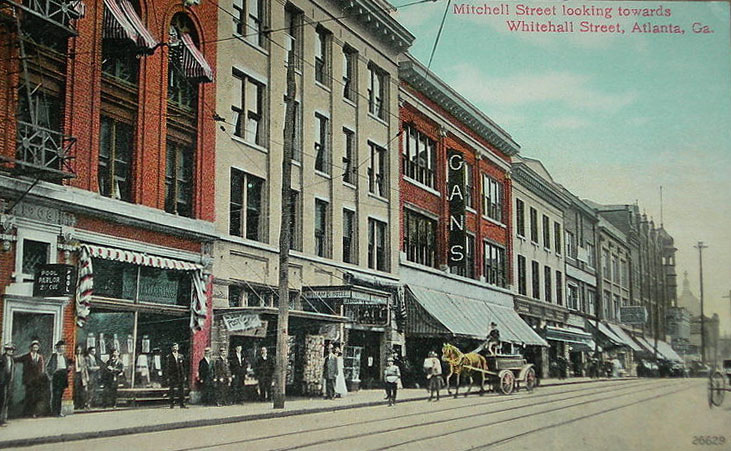
The north side of Mitchell Street between Forsyth and Spring is now known as the Hotel Row Historic District. It was placed on the National Register in 1989, and for good reason. Like Broad Street south of Five Points, this area was more or less ignored when other parts of the city were being redeveloped. Looking on the bright side, that means that it’s retained substantially more of its historic character than the northern part of downtown, where entire blocks were cleared to make space for modern office towers and soaring new hotels. Hotel Row and other intact pockets of the neighborhood are little time capsules, representative of what most of downtown looked like in the early 20th century: sturdy, but not boring, three- to five-story brick buildings with shops and restaurants on the ground floor and offices, residences, or lodging above.

A postcard shows Hotel Row circa 1910.

Starting at the eastern end of the block, where Mitchell intersects Forsyth Street, you’ll find Concordia Hall. On the Forsyth Street side, you can still see old advertisements painted on the brick, right above the gator waiting for a belly rub who was added to the building as part of Living Walls in 2011. You’ll also see the detail that makes these buildings exceptional. Although some of the applied ornament on the front of the building has been removed over the years, the arched windows, fluted pilasters and remaining stone, terra cotta and brick detailing are definitely worth a look.

Concordia Hall is the oldest building in the district – it’s the only one that survived the 1908 fire. The Concordia Association was founded at Morris Rich & Co. (later Rich’s Department Store) on Whitehall Street (now Peachtree Street) to provide social and cultural opportunities for Jewish businessmen, mostly of German and Hungarian descent. The building was designed by Bruce & Morgan, who also did the neo-Gothic Healey Building in Fairlie-Poplar (stay tuned for more on them, too). In 1912, when the Concordia Association was less active, the upper floors were converted to hotel rooms.

Moving west, the next five buildings all date to 1908-1909, shortly after the fire. The Gordon Hotel was designed by one of my favorite Atlanta architects, Willis F. Denny – probably better known for Rhodes Hall and the recently renovated Kriegshaber House, now the home of the Wrecking Bar. (Denny managed to to get a lot done by the time he died at just 31 – I really need to hurry up and design something that will still be standing in another 100 years!) Now Gordon Lofts (yes, you could live there – and there’s a roof deck!), the exterior of the building retains its ground-level stone pilasters, historic windows and Ionic capitals.

Third-floor windows and Ionic capitals at Gordon Lofts, formerly the Gordon Hotel. Photo credit: Kristin Halloran.

The unnamed commercial building next door is a simple one, solid and elegant. It is separated from the Gordon by an alley, as was common in late 19th- and early 20th-century planning. Most blocks had alleys; Atlanta abandoned nearly all of them in the 1970s. This one now leads to parking for Gordon Lofts.

The Scoville Hotel is next. Plenty of detail is still present on the building’s exterior, and I’ve heard that there are original light fixtures and tile in the lobby. Look for particularly nice stone detailing above the second-floor windows, along with a gabled parapet and a heavy pressed metal cornice with dentils, which are just what they sound like – teeth. The Scoville has been on the market since February. Anyone interested?

The Factory Building is another fairly simple building, also with a heavy cornice. Lunacy Black Market, a favorite haunt of neighbors (like me), is located on the ground floor – Chef Paul Luna (of Loca Luna and Eclipse di Luna fame) opened this eclectic little restaurant after riding his bicycle across the country . It’s friendly and cozy, and there’s not a single thing on the extremely affordable menu of small plates that I haven’t liked. I’ve taken ATLRetro editor Anya99 there, and I think she agreed [Ed. note: yes, I did!]!

The Scoville Hotel - imagine what the right buyer could do with this place! Photo credit: Kristin Halloran.

Last is the Sylvan Building, which has also been converted to loft apartments. It’s a lovely four-story building that was rehabilitated in the late 1980s with help from Atlanta’s Historic Facade Program. It retains much of its brick detailing, and continues the line of the heavy cornices with parapets above.

Need another reason to visit Hotel Row? Small Business Saturday is coming on Nov. 24! The Atlanta Bicycle Coalition is in the Gordon and a cute new boutique called Girlfriends recently opened nearby. Friedman’s Shoes, a family-owned business that’s been around since 1929, is located in Concordia Hall. My husband buys his shoes there from a salesman named Murray, whose raspy voice and accent might make you wonder if you’ve somehow been transported to Queens. Friedman’s has been well-known for years for its appeal to athletes who take advantage of its large range of sizes, including Shaquille O’Neal, Charles Barkley and Julius Erving. The interior is a fascinating maze – make sure someone sees you go upstairs in case you can’t find your way out! And they do carry women’s shoes, too – I have a neighbor who got a great deal on samples there in size 7!

In addition, the art galleries of Castleberry Hill are just over the bridge, as are the Wine Shoe , a down-to-earth tasting room and wine shop, and No Mas, where you’ll find unique handmade furniture, glassware, jewelry and art objects straight from Mexico.

Whew. Have I given you enough ideas to fill up an afternoon downtown? If not, here’s one more thing to do in the neighborhood – Atlanta Movie Tours!  Both downtown and Castleberry Hill have been overrun with TV and movie crews lately, and some pretty famous stars – I heard that a certain former Governor of California was here earlier this week filming car chases and gunfights that frightened everyone’s pets. Atlanta Movie Tours will let you walk (and ride) in the footsteps of your favorite actors from classic and recent movies filmed downtown and farther afield. ATLRetro readers might be particularly interested in the Big Zombie Tour and can use promo code ATLRETRO for a 25% discount on either of the regularly scheduled tours during December – the Big Zombie Tour or the Big Southern Hollywood Tour. I hope to see you in my neck of the woods soon!

ATLRetro Contributing Writer Kristin Halloran is a damn Yankee who loves living in downtown Atlanta. She is an architect at Lord Aeck & Sargent, and her favorite things include vintage postcards, old brick buildings and secondhand bookstores.

Category: Really Retro | Tags: , , , , , , , , , , , , , , , , , , , , , , , , , , , , , , , , , , , , , , , , , , , , , , , , , , , , , , , , , , , , ,

A Sexy Silent Scandal at The Strand Theatre: Daring to Reopen Louise Brooks’ PANDORA’S BOX

Posted on: Nov 21st, 2012 By:

PANDORA’S BOX (1929); Dir: Georg Wilhelm Pabst; Starring Louise Brooks, Francis Lederer; with live organ accompaniment by Ron Carter; Sun. Nov. 25 3:00 p.m.; The Strand Theatre

By Andrew Kemp
Contributing Writer

Ever since The Earl Smith Strand Theatre found new life on the Square in Marietta, the theater’s event schedule has cast a wide net. In between the usual live events and mainstream film titles, The Strand quietly stands as one of the last venues in Atlanta to regularly seek out and book classic silent films, a callback to its roots as an old movie house. (The Strand’s first ever show was the 1935 Fred Astaire-Ginger Rogers vehicle, TOP HAT.) Except that by the time The Strand opened, the talkies had already taken hold, so the decision to run silent pictures in an increasingly-noisy age of media strikes me as more than nostalgia. It’s incredibly brave.

And so, fittingly, The Strand has found a brave picture to screen. There are few silents more daring than PANDORA’S BOX (1929), playing Sunday afternoon Nov. 25 at 3 p.m.—even braver!—accompanied by a full organ score. PANDORA’S BOX doesn’t fit the mold of the typical silent melodrama. Louise Brooks stars as Lulu, a young woman whose ambition is eclipsed only by her voracious sexual appetite. She uses sex as a weapon to get what she wants, or who she wants, and the film largely deals with an escalating series of consequences, from murder, to imprisonment, and finally… well, I won’t spoil it, but Lulu’s story crosses with a famous historical figure, and her final reward is a spot in historical infamy.

PANDORA’S BOX is directed by the great Austrian director G.W. Pabst, whose list of leading ladies includes such names as Greta Garbo and Leni Riefenstahl, but he cast no lady as magnetic or iconic as Brooks, whose distinctive flapper style and bobbed haircut are more famous today than her name. Brooks was an American actress who rubbed elbows with names like William Randolph Hearst, but who grew dissatisfied with the American system and fled to Europe, where audiences came out in droves to see her magnetism and sexuality portrayed on screen. Lulu is a part born for Brooks and, although the film met with a fair amount of pushback from concerned censors, eventually made Brooks an international star. Today, her name is inseparable from the film’s title.

I mentioned censors, but it’s important to note that PANDORA’S BOX was a pre-code picture. In fact, the film came to America in December 1929, only three months before the adoption of the Hays Code that put a lid on the titillation and sexual experimentation of the earliest studio pictures. (Even in the ’20s, people knew the truth about film audiences—sex sells tickets.) PANDORA’S BOX contains a litany of elements that would soon disappear from American cinemas, such as frank sexuality and a disrespect for marriage. Just a decade later, Lulu’s actions would have classified her as a femme fatale, and she’d certainly snare a young hero or two to their doom. Here, the reality is a bit more complicated, and although it’s true that Lulu faces retribution for her loose morals, it’s hard to ignore the allure of her behavior, which is what the Hays Code was trying to snuff out in the first place.

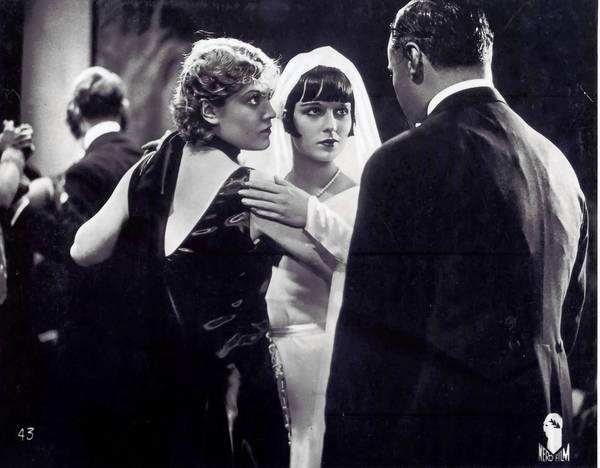
Alice Roberts as Countess Anna Geschwitz and Louise Brooks (center) as Lulu in PANDORA'S BOX (1929), directed by G.W. Pabst. Credit: UCLA Film and Television Archive

PANDORA’S BOX is also a landmark film in queer cinema, as it does contain (if briefly) one of the first ever screen representations of a lesbian. Played by Alice Roberts, the Countess Geschwitz enters the film dressed in men’s clothes—a tuxedo—and fawns over Lulu, suggesting that the two have a sexual past. Within a year, even such a minor reference to homosexuality would be strictly outlawed on American screens.

PANDORA’S BOX is widely available online, but as with all films, especially from this era, it belongs on the screen (and trust me when I say that a live organ makes all the difference in the world). The film arrived at the end of the golden period of silent films, the end of the pre-code movies, and even puts a symbolic coda on the decade of decadence that was the 1920s. It stands proud as a threshold between two very different eras of cinema. But its sexuality, its spectacle and the compelling nature of its tragic antihero also remind us of another, sometimes-forgotten fact: what excites and thrills us today is the same as it ever was. We didn’t change—the pictures did.

For more about The Strand’s efforts to screen silents as they should be with live organ scores, read our Kool Kat interview with organist Ron Carter, who will be accompanying PANDORA’s BOX here

Category: Features | Tags: , , , , , , , , , , , , , , , , , , , , , , , ,

Retro Review: THE ROAD WARRIOR Is the STAR WARS of the Post-Apocalypse and It’s Playing at the Plaza The Day Before Thanksgiving

Posted on: Nov 20th, 2012 By:

THE ROAD WARRIOR (1981); Dir: George Miller; Starring Mel Gibson, Bruce Spence, Kjell Nilsson; Wed. Nov. 21 9:30 p.m.; Plaza Theatre; Presented by Astrodog; trailer here.

By Andrew Kemp
Contributing Writer

George Miller’s THE ROAD WARRIOR is the STAR WARS of the post-apocalypse. The film didn’t invent the genre, but it seemed to perfect it and codify it for an entire generation of fans while simultaneously transforming Mel Gibson into a household name, and it’s returning to the big screen for one night only at the Plaza Theatre on November 21 at 9:30 p.m., presented by Astrodog.

One man alone in a wasteland. A growling convoy of modified trucks driven by thieves and thugs. A shantytown built from spare parts and spare people. We’ve seen these elements before, clichés of the post-apocalypse. Whenever we imagine a world-killing event, we tend to assume that society will give it about a week before we all start eating each other. It’s one of the oldest “what ifs” we have. What if tomorrow there was nothing left of the world but ruins, need and violent men?

But THE ROAD WARRIOR uses these familiar elements to create an action movie that transcends the grim parameters of its subject matter, making the end of the world thrilling, exciting, and even… fun. It’s the apocalypse-as-theme-park, but it completely, totally works, and although the film falls squarely in the middle of a larger franchise—the MAD MAX series—it’s easily the best of the bunch.

Gibson stars as Max, a lone warrior simply trying to survive in the aftermath of an unnamed apocalypse. Max’s world has been reduced to a barren desert (and one that looks awfully similar to the Australian outback), and vehicles have become as essential to survival as food and water. That means, naturally, gasoline (a suddenly non-renewable resource) is more precious than gold. In search of gas, Max enters an uneasy alliance with a rusty settlement of survivors, but he faces a tough choice when the town is besieged by brutal bandits led by the Lord Humongous (Nilsson). Will he abandon the town or put his life on the line to defend them? Hint: running away wouldn’t make for much of a movie.

It’s tough to look at Gibson today without getting tangled up in the headlines and scandals that have effectively ended his Hollywood career. It’s pretty clear at this point that Gibson has morphed into a fairly despicable person behind the camera, but his presence in front of the camera is impossible to deny. THE ROAD WARRIOR leaves no room for Max’s backstory, no tender moments to open up to the people around him. He’s nearly silent, a wandering ronin in the wrong place and time, but Gibson’s haunted eyes tell all the story you need. You can feel Max’s loneliness and pain even during the moments where he’s flint-hard. THE ROAD WARRIOR is a movie that doesn’t need its predecessor, but if you know that Max was once a cop and that he lost his family to thugs like Humongous, the extra layers start popping.

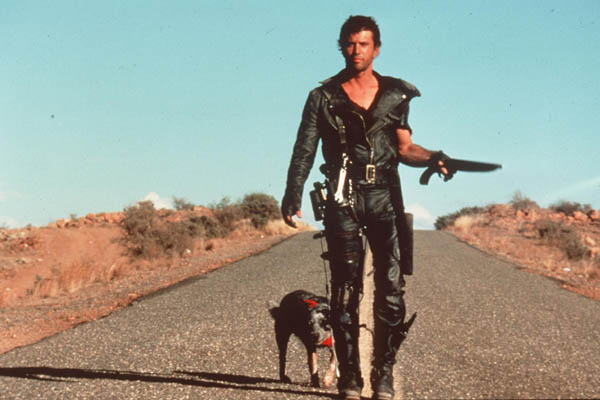
Mel Gibson as Mad Max in THE ROAD WARRIOR. Warner Brothers, 1981.

THE ROAD WARRIOR is also one of the crown jewels of raging car movies, a cinematic soulmate to films like DEATH RACE 2000 (1975) or VANISHING POINT (1971). George Miller arrived on the scene during the peak of “Ozploitation,” a golden age of Australian trash cinema that ran throughout the 1970s and ’80s and produced a slew of genre classics, from WAKE IN FRIGHT (1971), to LONG WEEKEND (1978) and DEAD END DRIVE-IN (1986). Miller was playing to an Aussie audience that knew their way around a car chase, and so he doesn’t skimp on the action, stuffing the film full of crunching metal, roaring engines, and cackling villains. The result is entertaining and often mythic. Stripped of its setting, THE ROAD WARRIOR is still a film about one man struggling against unbeatable odds for no other reason than it’s the right thing to do. The timelessness of the story has helped the movie age very well, and, if anything, it’s even more relevant today. Produced in the wake of the gas shortages and transportation nightmares of the 1970s, the film feels especially timely in a world of $4 a gallon gas and feasible projections that say we’ve either neared or reached (and passed) the peak of our oil production. The world of the future may belong to the likes of Humongous.

THE ROAD WARRIOR improved on its less-polished, more visceral predecessor MAD MAX (1979), but the series took a nose dive in the third film, MAD MAX BEYOND THUNDERDOME (1985). After that, Miller’s career went off into a variety of directions. Most recently, he’s been crafting thoughtful (if not entirely successful) fantasy films for children, producing Oscar-nominee BABE (1995) and directing its culty sequel, BABE: PIG IN THE CITY (1998) and both HAPPY FEET (2006) and HAPPY FEET TWO (2011). But that engine you’re hearing is the sound of that changing. Miller has been deep in production on the fourth film in his series, MAD MAX: FURY ROAD, for the last couple of years, replacing Gibson with the younger and suddenly very marketable Tom Hardy. Although the new film isn’t considered a remake or a reboot, it will still serve to introduce the franchise to a new generation of fans. For those who can’t wait that long, THE ROAD WARRIOR was born for the big screen.


Category: Retro Review | Tags: , , , , , , , , , , , , , , , , , , , , , , , , , , , ,

Retro Review: Darkness in Daylight: The Plaza Theatre Descends into Alfred Hitchcock’s VERTIGO

Posted on: Nov 19th, 2012 By:

VERTIGO (1958); Dir: Alfred Hitchcock; Starring James Stewart, Kim Novak and Barbara Bel Geddes; Fri. Nov. 23 – Sun. Nov. 25; Plaza Theatre (visit Plaza Theatre Website for showtimes and ticket prices); Trailer here.

If the film noir is defined by its most typical set-up—that of a doomed man swept up in events outside his control, often by a manipulative female figure—then Alfred Hitchcock’s towering VERTIGO is that most rare of films noir. It trades the genre’s high-contrast black-and-white for rich Technicolor. It places its characters not in the dimly-lit nightshade world of seedy bars, backrooms and private dicks’ offices; but in art museums, redwoods forests and the sunny streets of San Francisco. In the world of VERTIGO, the shadows of night may still hold mysterious threats, but the stark light of day reveals their constant presence all too clearly. There is, truly, no escape.

In this film, James Stewart paired with Hitchcock for their final collaboration. Stewart had long been one of Hitch’s archetypal actors. Whereas Cary Grant represented the Idealized Man in his cinematic world, Stewart was the Everyman. Grant was the go-to guy when Hitch needed a lead that viewers would either want to be or want to bed. Stewart was the guy next door, bringing a down-to-earth sensibility to his roles, and much of the attraction of him as a lead in Hitch’s films was in seeing this average Joe rise above his limitations to triumph at the end.

In VERTIGO, however, Stewart’s average Joe is taken far away from next door; his obsessions and fears exposed as he is broken beyond repair.

Stewart stars as former police detective John “Scottie” Ferguson, whose vertigo and fear of heights manifest in a rooftop police chase and result in the death of a fellow officer. Stricken by depression, he has retired from the force and struggles to overcome his fears. He is enlisted by an old college acquaintance, Gavin Elster, to trail his wife Madeleine (Kim Novak), whom he claims has been possessed by the spirit of the long-dead suicide victim Carlotta Valdes. Scottie witnesses Madeleine attempt to kill herself by jumping into San Francisco Bay and rescues her. They then become ensnared in an obsessive and doomed romance that can only result in death, a break with sanity, or both…

James Stewart and Kim Novak in VERTIGO. Paramount Pictures, 1958.

Kim Novak perfectly essays the role of a most unusual femme fatale: manipulative without being forceful, cool and reserved yet with a barely-concealed sexuality, strong yet fragile. However, Barbara Bel Geddes (whom viewers would later come to know as “Miss Ellie” Ewing on the TV series DALLAS) is perhaps the most overlooked character in the film: Scottie’s long-suffering ex-girlfriend Midge, a bohemian clothing designer, who represents the polar opposite of Madeleine. Where Madeleine is cool, Midge is warm. Where Madeleine is perfectly poised and elegant, Midge is natural and almost frumpily grounded. And where Madeleine represents everything that will tear down Scottie, Midge represents that lost potential for true happiness. Madeleine may be an impossible ideal, but Midge is real, there, now. And her love and devotion to Scottie may be the only path for his salvation, but how can he see that path with the dream that is Madeleine beckoning him from just beyond his reach?

The film was a critical and commercial failure upon release. Some felt it was too long and too complicated for a simple psychological mystery. Hitchcock believed that James Stewart’s age was a factor in the film’s failure, and replaced him with Cary Grant in the following year’s NORTH BY NORTHWEST (four years older than Stewart, true, but eternally youthful). Many, however, were disappointed that this movie was not another romantic mystery along the lines of 1956’s THE MAN WHO KNEW TOO MUCH. In fact, the mystery is practically subservient to the film’s depiction of obsession—it’s solved two thirds of the way through the movie. Hitchcock often referenced the term “MacGuffin”: the mechanical element that sets a story into motion, yet which is ultimately unimportant to the plot’s progression. In John Huston’s 1941 film THE MALTESE FALCON, for instance, it’s the titular sculpture. In NORTH BY NORTHWEST, it’s a cache of microfilm. In the case of VERTIGO, it’s the mystery itself. The whys and wherefores of how Scottie has become obsessed with Madeleine are not important; his fears and obsessions are, instead, the focal point, and how they emerge and re-emerge during the course of the story are what carries us along the inevitable path to the film’s particularly noir conclusion.

However it was dismissed in the past, in more recent years VERTIGO has been reevaluated. Beginning with Robin Wood’s seminal 1965 work HITCHCOCK’S FILMS, critics have paid closer attention to the film and what it attempts to accomplish. Many have come to regard the film in retrospect as Hitch’s most personal work: a fully-realized exploration of his own obsession with a particular “type” of woman, embodied in Grace Kelly, and his need to craft the images of his actresses to fit this particular model. This was an obsession, as depicted in Donald Spoto’s THE DARK SIDE OF GENIUS and the HBO original film THE GIRL, which would be ultimately destructive to his professional relationships with women. But despite the speculative personal aspect of VERTIGO, most have come to realize that as a film on its own merits, that it stands as a masterpiece. Indeed, it has topped the British Film Institute’s 2012 Sight & Sound critic’s poll as the greatest film ever made.

VERTIGO’s relative failure at the time meant that preservation wasn’t as much of an issue. Thankfully, the film was meticulously restored by film historian Robert A. Harris and his team, using materials ranging from the original camera negatives (which Harris notes “looked hideous”), to damaged black-and-white color separation masters, to fuzzy film prints as many as eight generations removed from the original negatives. Using all of the materials at their disposal (including a preserved green paint sample from a model of car featured in the film which was utilized for color timing), Harris and company worked miracles, producing an almost immaculate presentation of what many consider Hitchcock’s true masterpiece.

To see such an important film, preserved and restored so well, presented on the big screen is a treat to be savored by any film fan, whether casual or hardcore. And this treat is available at the Plaza Theatre for one weekend only. Some things simply should not be missed. Don’t let this one pass you by.

Aleck Bennett is a writer, blogger, pug warden, pop culture enthusiast, raconteur and bon vivant from the greater Atlanta area. Visit his blog at doctorsardonicus.wordpress.com

Category: Retro Review | Tags: , , , , , , , , , , , , , , , , , , , , , , , , , , , ,

© 2025 ATLRetro. All Rights Reserved. This blog is powered by Wordpress